
Go-to-Market Strategy
A launch is not a list of channels. It is a set of connected decisions.
Go-to-market work decides who the product is for, the problem it owns, the offer, the message the market hears, the channel that reaches that buyer and what has to exist before launch — then treats the launch as something to learn from rather than an event to survive.
Launch strategy and the creative and digital execution around it. Not market-entry consulting — no market sizing, entry-mode advice or regulatory work is offered here.
FounderWhat exists?
Something is built and it works. That is the starting point, and on its own it produces no demand at all — which is the part founders are most often surprised by.
You and usWho is it actually for?
Not who could use it — who has the problem badly enough to change something. Narrowing here feels like losing market and is the decision that makes every later one possible.
You and usWhat does it own?
One problem this buyer already knows they have, in the words they already use for it. A product that solves nine things is bought for one of them.
You and usWhat do they actually get?
The product is what you built. The offer is what somebody says yes to — what happens, how quickly, and what it costs them to try. They are not the same thing and they are constantly confused.
UsWhat should the market hear?
The sentence the buyer would use themselves, not the one the company is proud of. If it could belong to a competitor, it is not the message yet.
UsWhere does this buyer actually look?
One primary channel, chosen because that is where this buyer already goes — and a short list of what is deliberately not being done yet.
UsWhat goes live, and what does it answer?
A launch is not a date. It is the smallest set of things that can carry the message to that channel, plus one question the launch is trying to answer.
- Buyer
- Everyone who could possibly use itOperations leads at service businesses running several sites Decided
- Problem
- Teams waste time and make mistakesWork is tracked in three places and nobody can say what is outstanding Decided
- Offer
- The product itselfOne live board across every site, set up with your own data before you decide Deciding
- Message
- An all-in-one platform for modern teamsStop reconciling three spreadsheets to answer one question Too broad
- Primary channel
- Everywhere at onceSearch where they compare tools · supported by direct outreach Too broad
- Next move
- LaunchOne landing page and one demo path · does the sentence land? Too broad
- Too broadTrue, and not yet usable.
- DecidingThe decision on the table.
- DecidedSpecific enough to act on.
Illustrative launch brief · sample data
Offer: What do they actually get?Move through the decisions. Nothing is added — every line already has an answer, and what changes is how specific it is.
The problem underneath
Every discipline is working. They are answering different questions.
This is rarely a failure of effort. It is what happens when the launch has no single answer to who it is for.
What is a go-to-market strategy?
A go-to-market strategy is the plan for taking a product or service to a market: who it is for, the problem it will own for them, the offer they are being asked to say yes to, the message that carries it, the channels where that buyer will actually encounter it, and what has to exist before launch. It is a commercial plan rather than a marketing calendar, and its job is to make every discipline answer the same question.
What does a go-to-market plan include?
At minimum: a defined buyer, the problem the offer owns for them, the offer itself, a message system, a primary channel with a deliberate list of what is not being done yet, the assets the launch needs, and the signal the launch is meant to produce. What it does not include is everything a company could theoretically do — a plan that lists every channel is a wish list, not a plan.
- Founder notesThe sharpest version of the positioning, in a document three people have read.
- The productBuilt around what it can do, which is not the same as what it is bought for.
- The websiteWritten before the buyer was decided, so it speaks to everybody.
- The content planTopics chosen because they are searchable, not because this buyer searches them.
- The campaignRunning to an audience that was picked in the ad platform rather than in the plan.
- The sales deckA different order, a different emphasis, and a promise nobody else made.
Nothing here is wrong on its own. The cost is that a buyer hears a different story in each place, and the company cannot tell which part of the launch is failing because no two parts were testing the same thing.
This is not an argument for doing less. It is an argument for the decisions coming first, so the work everybody is already doing points the same way.
The three that decide everything else
Narrowing the buyer is the decision that makes the rest possible.
These three are worked in order, because each one is unanswerable until the one before it is settled.
What is the difference between a product and a go-to-market offer?
The product is what was built — its features and what it can do. The offer is what a buyer is being asked to accept: what happens when they say yes, how quickly they see it, and what it costs them to try. Two companies can ship the same product and sell entirely different offers, and it is the offer that decides whether the launch converts. Describing the product and calling it an offer is one of the commonest reasons a good launch stalls.
How do you choose a target customer for a launch?
By narrowing until the message can stop hedging. Start from everyone who could use it, then cut to the group who feel the problem most sharply, then to the person inside that group who owns it and would have to act. A usable definition is one you could name real examples of — and the test is whether the message, the proof, the channel and the sales conversation all become easier to write once it is fixed. If narrowing does not make those easier, it has not gone far enough.
- BuyerWho has this problem badly enough to change something?Not a demographic and not a persona document. A group specific enough that you could name five of them, and specific enough that the message can stop hedging.
- ProblemWhat does the offer own for them?One problem they already know they have, in the words they already use. If they would not say the sentence themselves, it is not the problem — it is the category.
- OfferWhat are they actually saying yes to?What happens, how soon, and what it costs them to find out. Products are described; offers are accepted.
What narrowing actually looks like
- Every business
- Service businesses
- Service businesses running several sites
- Their operations lead, who owns the mess
Each step feels like losing market and is the opposite. The last one is the first version specific enough to write a sentence for.
The most common launch failure is not a weak message. It is a message written before anybody decided who had to believe it.
What the market hears
If a competitor could say it, it is not your message.
A message system is not a tagline. It is what the buyer hears first, what they hear next, and what makes the claim believable.
What is the difference between positioning and messaging?
Positioning is the decision about what the product is, who it is for and what it replaces — a commercial choice made once and changed rarely. Messaging is how that decision is said, and it varies by audience, channel and moment. Messaging without positioning produces copy that sounds different everywhere; positioning without messaging stays in a document nobody outside the founding team ever reads.
- The sentenceWhat the buyer would say about their own problem, offered back to them. It should feel obvious rather than clever.
- The reason to believeWhy this is credible from you specifically — proof, mechanism, or the thing only you can honestly say.
- The alternativeWhat they do today. A message competes with the spreadsheet and the status quo far more often than it competes with a rival.
- The consequenceWhat changes on Monday if they act, and what continues if they do not.
An all-in-one platform that transforms how modern teams work
Stop reconciling three spreadsheets to answer one question
The first is about the company. The second is about the buyer’s Tuesday. Only one of them is repeatable by a salesperson, a landing page and an ad without drifting.
The message is written with you, not for you. The sentence that lands is usually one a founder has already said out loud in a sales call and not recognised as the positioning.
Where the buyer already looks
One primary channel, and an honest list of what is not being done yet.
Channels are not a menu to be worked through. They are a consequence of who the buyer is and how they already decide.
How do you choose go-to-market channels?
By starting from the buyer rather than the channel list. Where do they first hear about something like this, where do they compare options, and who else is in the decision — the answers usually rule out most of the list immediately. Then pick one primary channel to carry the launch, one supporting channel that teaches you quickly, and write down what is deliberately not being done yet. The postponed list matters as much as the chosen one, because without it every channel quietly becomes half-resourced.
- Where do they first hear about things like this?Discovery is rarely where a company assumes it is.
- Where do they compare options?Usually somewhere with more detail and less noise than where they discovered it.
- Who else is in the decision?A second reader changes the asset far more than it changes the channel.
- What would make them act now rather than later?The answer is usually an offer question, not a channel one.
- Search where they compare toolsPrimaryHigh intent, slower to build, and it compounds. First because this buyer researches before they talk to anyone.
- Direct outreach to named accountsSupportingSmall numbers, fast feedback on the message. Second because it teaches quickly even when it sells slowly.
- Paid acquisitionNot nowHeld until the message and the landing page have been tested for free. Paying to distribute an unproven sentence is the most expensive way to learn it is wrong.
- Organic socialNot nowReal, slow, and better started once there is something specific to say every week.
The list of what is not being done is the part that makes a launch plan real. A plan with five primary channels has no primary channel and no way to tell which one worked.
The launch that tries to do everything
Five channels, seven assets, three messages, no shared priority.
This is the most common shape of a launch that is failing, and from the inside it looks like momentum.
What it looks like
- Five channels, each resourced enough to be disappointing
- Seven assets, written by different people from different briefs
- Three messages, none of them repeated often enough to be remembered
- A launch date, and no question the launch is trying to answer
- Everybody busy, and nobody able to say what is working
What it becomes
- One buyer, specific enough to name examples
- One message, repeated until it is boring internally
- One primary channel, with a supporting one that teaches fast
- The assets that channel actually needs, and no others yet
- One question the launch answers, and a decision waiting on the answer
The second version is not smaller because it is cautious. It is smaller because it is the only version that produces a readable answer — and a readable answer is what earns the second round of effort.
No figures appear in this comparison, and none should. What is being described is a structural difference in how a launch is organised, not a measured result — Branditify publishes no launch outcomes and makes no promise about traction.
What has to exist before launch
The shortest list that can carry the message to that channel.
Assets follow the decisions. A launch asset list written before the buyer is decided is just a list of things an agency can make.
What needs to be ready before a launch?
Less than most plans assume, and more specifically. A place the message lands where a stranger can act on it, proof they will believe, enough content to be credible in the one channel being used, and whatever creative that channel needs. What is not required is a full content calendar, every channel activated, or assets for channels that were deliberately postponed — building those before the message has been tested is the most common way a launch budget disappears before it learns anything.
- A landing page that answers one questionBranditify builds thisWhere the message becomes something a stranger can act on. Usually the first thing built and the first thing changed.
- The positioning and identity it is expressed inBranditify builds thisWhere the brand system already exists, the launch uses it. Where it does not, that is its own piece of work.
- Proof a stranger will believeBranditify builds thisWhatever is genuinely true and specific — a demonstration, a named result, a real customer. Never a number nobody measured.
- Launch content for the primary channelBranditify builds thisEnough to be credible in that channel, not a quarter of a calendar.
- Creative for the campaign, if there is oneBranditify builds thisOnly once the message has survived somewhere cheaper.
- A way to talk to the people who replyYour teamThe sales conversation itself is yours. What we can do is make sure it is having the same conversation the launch started.
Every item here is a Branditify discipline in its own right, and the point of the plan is that they arrive as one launch rather than five separate engagements pointed in different directions.
After it goes live
A launch is a question. The useful part is the answer.
Most launch plans end at the launch date. That is the point at which the plan starts being worth something.
How do you know whether a launch is working?
Early on, by what you hear rather than what you count. Whether prospects repeat the message or reword it, whether the channel produces the right kind of conversation, which question keeps returning after someone reads the page, and where people hesitate in the offer. Volume is rarely significant enough to read at launch, and treating it as though it were leads to changing everything at once. The useful output of a launch is a decision about what to change next.
- The messageDo people repeat it back, or reword it into something else? A prospect explaining your product better than your page is the most useful sentence you will hear.
- The channelAre the conversations it produces the right kind, not just the right number? A busy channel full of the wrong buyer is a clearer answer than silence.
- The landing pageWhich question keeps coming back afterwards? That question belongs on the page.
- The offerWhere do people hesitate — at the price, the effort, the risk, or the timing? Each points at a different fix.
- The buyerIs the person who responds the person you aimed at? Frequently the answer is no, and that is a finding rather than a failure.
When the assumption turns out to be wrong
It often is, and a launch designed to produce a readable answer is one that can afford to be wrong cheaply. The decision then is which layer to change — usually the message before the channel, and the channel before the product. Changing all three at once means the next launch teaches you nothing either.
No conversion figure, growth claim or benchmark appears here, deliberately. What a launch produces first is qualitative, and pretending otherwise is how plans get judged on numbers that were never going to be significant this early.
The three questions every buyer asks
It decides the plan. It is not the media, the identity or the build.
All three neighbours are real work Branditify does, and most launches need more than one. Knowing which answers what is most of the buying decision.
What is the difference between go-to-market and performance marketing?
Go-to-market decides the buyer, the problem, the offer, the message and which channel is worth using. Performance marketing runs the paid channel once that decision exists — campaigns, audiences, creative testing and optimisation. A launch plan frequently calls for paid acquisition, but it is broader than it, and paid media pointed at an undecided message will optimise the delivery of a sentence nobody agreed on. Most launches are better served by deciding first and buying media second.
What is the difference between go-to-market and marketing strategy?
Scope and horizon. A marketing strategy governs how a business communicates over time across everything it sells. A go-to-market plan is specific to one thing entering a market — this product, this buyer, this launch, this question — and it ends when that entry has been made and learned from. A company can have a marketing strategy and still need a go-to-market plan for a new offer, and frequently does.
Do you need go-to-market before or after building an MVP?
Some of it before, the rest after. Deciding who the buyer is and what the offer will be shapes what is worth building first, so those conversations pay for themselves during a build rather than after one. Launch execution — the page, the content, the campaign — needs something credible to point at, so it follows. The sequence that causes trouble is building everything and then asking who it was for, because by then the answer changes the product rather than the plan.
Go-to-market
Answers: what is the plan?
- Who the buyer is
- The problem the offer owns
- The message and the channel
- What has to exist, and what the launch answers
Performance marketing
Answers: how do we run the media?
- Campaign structure and budget
- Audience and bidding
- Creative testing
- Optimisation against a target
Runs the channel the plan chose. Given a message that has not been decided, it optimises the delivery of a sentence nobody agreed on.
Performance marketingBranding & identity
Answers: what does it look and sound like?
- The identity system
- Visual and verbal language
- How the brand is applied
- Consistency across everything
Builds the system the launch is expressed in. It answers who you are, not who is buying this specific thing right now.
Branding & identityAnd the product build
MVP and SaaS development builds the thing. Go-to-market decides how it enters the market. They overlap earlier than most people expect: the buyer and the offer shape what is worth building first, which is why the buyer conversation is more useful before a build is finished than after it.
MVP & SaaS developmentA go-to-market plan usually results in work from several of these. The difference is that it decides what that work is for before anybody starts making it.
Where the line is
The other half of this search is a different profession.
Searching go-to-market returns two kinds of firm. Being clear about which one this is saves everybody a call.
- Market-entry consultingFirms that help a company enter a new country — sizing the market, choosing an entry mode, localisation, regulatory and compliance work, partner selection. That is a different discipline with different qualifications, and Branditify does not do it.
- Market research and sizingNo TAM, SAM or SOM figures, no commissioned survey, no competitor dataset. Where the plan needs to understand a market, that is reading and conversations, and it is described as such rather than presented as research.
- Sales teams and outboundNo SDR resourcing, no sales outsourcing, no sales playbook as a product. The plan can shape what the sales conversation says; running it is yours.
- Fundraising and investor relationsA different audience with a different narrative. Where a deck is needed for investors, that is its own service.
- A template, framework or courseNothing here is downloadable. The work is a decision made with a specific business about a specific launch.
- Revenue forecastingNo projections, pipeline models or growth targets are produced. A launch that has not happened cannot be forecast honestly, and a number invented to fill a slide is worse than no number.
On pricing, precisely
The service record includes pricing direction, and that is what it means: a view on how the offer should be structured and what it should cost relative to the alternative the buyer is comparing it with. It is not a pricing study, an elasticity model or an economic analysis, and this page does not present it as one.
When there is already something there
Most of this work is repositioning, not starting over.
An established business launching a new offer already has a website, content, campaigns and a sales conversation. The job is deciding what still fits.
Who needs a go-to-market strategy?
Anyone taking something new to a market: a startup with a first product, a company launching a new service into an existing customer base, a business entering a segment it has not sold to before, or one repositioning an offer that is not landing. What they have in common is not company size — it is that the buyer, the message or the channel is currently a guess, and everything downstream is being built on top of that guess.
- The websiteWritten for whoever the business was for last time. Usually the fastest thing to change and the most revealing to read.
- Existing contentSome of it is still right for the new buyer. Most of it is about the old one.
- Live campaignsWhat they are actually buying attention for, which is not always what the plan assumes.
- The sales conversationThe most underused source of positioning in any business. What the team is asked repeatedly is the message.
- What customers already sayThe words they use for the problem, which are almost always better than the words on the site.
- Keep — it already speaks to the new buyer
- Change — right idea, wrong audience
- Retire — it belongs to a position the business has left
Starting from what exists is usually faster and always more honest than a blank page, because the business has already been learning something from the market — it just has not been written down as a decision.
What changes the size
What makes one go-to-market engagement larger than another.
Mostly how much has to be decided, and how much of the launch we then build.
What determines the scope of a go-to-market project?
Mostly two things: how much still has to be decided, and how much of the launch we build afterwards. A business that already knows its buyer and needs the message, channel and page is a contained engagement. One deciding the buyer for the first time, across several offers, with the identity and the site to build around it, is substantially larger. After that it is whether the work is a first launch or a repositioning of something already live, and how long we stay past the launch date.
- How settled the buyer isA business that can already name its buyer is doing a different, shorter piece of work than one deciding it for the first time.
- How much we executeThe decision itself is a contained engagement. Building the page, the content and the campaign around it is the larger half.
- Number of offers or segmentsOne offer to one buyer is a plan. Several, each needing its own message, is several plans that have to stay coherent.
- Positioning and identity workWhether the brand system already exists or has to be made for the launch.
- New versus existingA first launch decides. A repositioning also has to audit what is already live and choose what to retire.
- Channel depthOne primary channel done properly, versus a plan that has to stand up in several from the start.
- Sales involvementWhether the plan has to arm a sales conversation or only a self-serve one.
- How long we stayThrough the launch, or through the first round of learning and the changes it produces.
What we need to start
What is being launched and what state it is in, who you currently believe the buyer is and why, what already exists — site, content, campaigns, deck — what your sales conversations keep coming back to, which channels you are considering and why, and any date or constraint the launch has to respect. The most useful single input is a recording or a summary of the last three sales calls.
Background
Selected brand, website and commercial work.
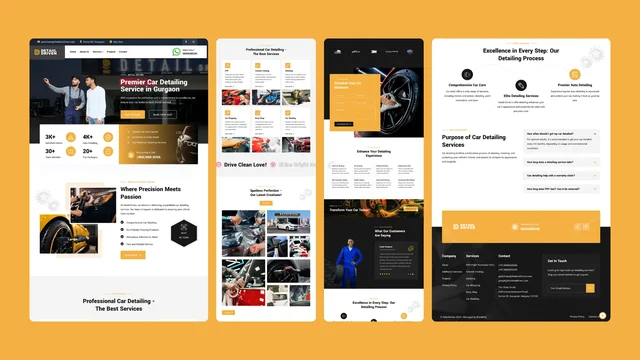
Three engagements where the commercial question and the execution were handled together. Each listed with what was delivered.

Questions
Asked before commissioning one.
- Do you do market-entry consulting for companies coming into India?
- No. That is a different profession — sizing, entry mode, localisation, regulatory and partner work — and it is worth going to a firm that specialises in it. What Branditify does is launch strategy for a product or service and the creative and digital execution around it.
- Does go-to-market include a website?
- The plan decides what the launch needs to point at, which is almost always a page. Whether we build it is a scoping question — sometimes it is a single landing page, sometimes the site itself needs rebuilding for the new buyer, and occasionally what exists is fine and only the words change.
- Does it include paid ads?
- Only if the channel decision says so, and usually not first. Paying to distribute a message that has not been tested somewhere cheaper is the most expensive way to discover it is wrong, so paid tends to follow the point where the sentence has held up.
- Does it include content and social?
- To the extent the chosen channel needs them. A plan that commissions a full content calendar and a social presence before the buyer is settled is producing work for channels that may be postponed a week later.
- Do you write the sales script?
- We shape what the sales conversation is claiming so it matches the launch, and provide the material it uses. Running the conversation, hiring for it and managing a pipeline stays with you.
- What if we already have a positioning we like?
- Then the work starts further along, and that is a shorter engagement. It is still worth pressure-testing it against the buyer and the alternative — a positioning that has never been read by someone outside the company is a hypothesis rather than a decision.
- Can you work with our existing agency or in-house team?
- Usually, and it is common. The plan is more useful to a team that already exists than to one that does not, because the value is in everybody answering the same question rather than in who executes.
- Will you tell us not to launch?
- If the honest answer is that the buyer is not decided or the offer is not credible yet, yes — and it is a cheaper conversation now than after a launch. More often the answer is to launch smaller than planned, into one channel, to find out which part of the assumption is wrong.
- How is this different from hiring a growth marketer?
- A growth hire runs and compounds the machine over time and is usually the better answer once the plan is decided. This is the decision itself plus the launch execution around it — a defined piece of work with an end, rather than an ongoing function.
- What do we own at the end?
- The plan and everything made for it — the decisions written down, the message system, the assets and any code or design produced. There is no licence and nothing is held back.
- How long does it take?
- It follows from how much is still undecided and how much of the launch we build, so it is scoped after seeing what exists rather than quoted before. The part worth protecting in any timeline is the gap between launching and changing something, because a launch judged too early teaches nothing.
- What happens after the launch?
- The first round of learning produces a decision — usually to change the message, the channel or the offer, rarely all three. Whether we stay for that is a scoping choice, and where a business wants ongoing cross-discipline support rather than a defined engagement, that is a retainer rather than this.
Start here
Bring us the product, the buyer you think it is for, and the plan you have so far.
The most useful first conversation is about what you have already tried to say and who did not respond to it.
- What is being launched, and what state it is in
- Who you currently believe the buyer is, and why
- What already exists — site, content, campaigns, deck
- What your sales conversations keep coming back to
- Which channels you are considering, and why those
- What customers already say about the problem
- Any launch date or constraint that is fixed