
RAG Knowledge Base
Ask your business a question.
A RAG knowledge base lets an AI system retrieve the relevant passages from sources you have approved, and build the answer out of them. Not from the internet. Not from a model’s general knowledge. From your warranty policy, your handbooks, your published pages — with the passages it used still attached.
Illustrative knowledge system · sample data · Northstar Industries
Question
Can a priority customer request an expedited replacement if the unit fails within 30 days?
Approved sources
- Warranty PolicyReplacement eligibility
Units failing within 30 days are eligible for replacement rather than repair.
- Priority Support HandbookExpedited handling
Priority customers may request expedited handling on an open replacement.
- Operations ManualApproval requirement
Expedited dispatch requires operations approval before the unit leaves.
- Product HandbookNo relevant passage
- Approved FAQsNo relevant passage
Answer
SupportedThree sources. Three clauses. Nothing in the answer that no source carries.
The gap
A general model has read a great deal. None of it is yours.
Ask any capable model a general question and it will do well. Ask it something only your business can answer and it has two options: decline, or produce something plausible. Neither is what you wanted.
What a general model can reasonably answer
- What a warranty usually covers
- How replacement policies are normally worded
- What expedited shipping generally means
What it has no way to know
- Your current replacement window
- Which of your customers count as priority
- Whether operations has to approve a dispatch
- Which version of the policy is the one in force
- What your team was told last month
- What is RAG?
- Retrieval-augmented generation, usually shortened to RAG, is a way of answering a question by first retrieving relevant material from sources you control, then generating the answer from that retrieved material. The model still writes the sentence. What changes is that the facts in it came from your documents rather than from the model’s general training.
- What is an AI knowledge base?
- A set of business sources — policies, handbooks, published pages, help articles, product documentation — that somebody has decided are authoritative, prepared so an AI system can find the specific passage that answers a question. The word "base" does less work than the word "approved": an unreviewed folder is a folder, not a knowledge base.
The difference that matters first
Search finds documents. This finds the sentence and does the reading.
Both are useful. They finish in different places, and the difference is most of the value.
Search
expedited replacement
- ReturnsFive documents that contain the words.
- ThenYou open them.
- ThenYou find the clause in each.
- ThenYou work out whether they agree.
- ThenYou write the answer yourself.
You have the documents. You still do the work.
RAG knowledge base
Can a priority customer request an expedited replacement if the unit fails within 30 days?
- RetrievesThe three passages that bear on the question.
- ThenAssembles an answer from what they support.
- ThenAttaches the passage behind each part.
- AndSays so when nothing supports it.
- LeavingYou checking an answer instead of building one.
You have the answer, and the means to check it.
- What is the difference between search and RAG?
- Search helps you find documents that mention something. RAG retrieves the relevant passages from those documents and uses them as the context for a written answer, with the passages kept alongside it. Search ends at a list. RAG ends at an answer you can check.
Before anything is retrievable
Somebody has to decide which version is the real one.
This is the part of a knowledge system that has nothing to do with AI, and the part that decides whether it works. Most businesses do not have a knowledge problem. They have four copies of the same policy and no agreement about which one counts.
What a refund answer usually has to choose between
- Refund Policy v2.pdfLast edited two years ago
- Refund Policy FINAL.docxLater, but never published
- Refund FAQWritten for customers, simplified
- The refunds page on the websiteCurrent, and the one you stand behind publicly
Which of these is the answer?
- 01Source auditWhat exists, who owns it, when it last changed, and whether anyone still stands behind it.
- 02Authority decidedOne source becomes the one that answers. The decision is yours; we make it explicit.
- 03The rest excludedOlder and duplicate copies stay in your drive. They stop being answer material.
- 04Prepared and indexedThe approved source is split into retrievable sections and made available to the system.
Why a hundred-page handbook is not one answer
A source that size is broken into sections that each make sense on their own, so the system can retrieve the part that actually addresses the question instead of handing back the whole file. The technical name for that step is chunking, and how a source is divided has more effect on answer quality than most of the choices that get more attention.
What can become a source
- Policies and terms
- Product documentation
- Operations and process guides
- Support and help articles
- Published website pages
- Approved FAQs
- Internal handbooks
- Structured records, where reading them is allowed
What a specific system can expose — an API, a documented integration, an export — is confirmed with you before anything is designed around it. That check comes before the connector, not after it.
The behaviour worth paying for
The useful answer is sometimes “that is not written down anywhere”.
A knowledge system earns its place on the questions it refuses. Anything can produce a confident paragraph. Knowing that the business never approved one is the harder behaviour, and the one that decides whether your team trusts it.
Can we promise delivery within two hours?
What a system with no evidence rule says
Yes — two-hour delivery is available on priority orders.
What this one says
Nothing in the approved sources sets a delivery guarantee.
Not in approved sources- Ask the person who owns dispatch
- Or approve a source that answers it
No approved source mentions a two-hour promise. The invented version is the dangerous one, because it is a commitment your business did not make.
Can a priority customer get an expedited replacement, and how long does it take?
What a system with no evidence rule says
Yes, expedited replacements ship within 24 hours.
What this one says
The replacement and the expedited request are both supported. No approved source states a timeframe.
Partly supported- Answer the supported half
- Flag the timeframe as missing
Half of this question has an answer. Answering the supported half and naming the gap is more useful than answering all of it badly.
What is the best replacement?
What a system with no evidence rule says
The Series 4 is our best replacement unit.
What this one says
This could mean the best-selling unit, the closest equivalent, or the one in stock. Which did you mean?
Needs clarification- Ask one clarifying question
- Then answer the one that was meant
The question is ambiguous rather than unanswerable. One question back is cheaper than a confident answer to the wrong reading.
What is the current refund window?
What a system with no evidence rule says
Refunds are available within 30 days.
What this one says
Two approved sources disagree: one says 30 days, one says 14. This needs a decision, not a guess.
Sources disagree- Route to the source owner
- Resolve by authority or recency
Silently picking one is the worst option available, because it hides a real disagreement inside a confident sentence. When your sources disagree, the problem is knowledge governance and no amount of retrieval fixes it.
- Does RAG eliminate hallucinations?
- No. RAG reduces unsupported answers by putting relevant source material in front of the model and keeping that material visible next to the answer, which also makes a wrong answer much easier to catch. It does not make every answer correct. Retrieval can miss the right passage, an approved source can itself be out of date, and a model can still overstate what a passage says. The controls that matter are source quality, what the system does when support is weak, and somebody reviewing the questions it gets wrong.
Not every answer is for everyone
The same question, asked by three people, is three different answers.
A knowledge layer that ignores this is unusable in most businesses, because the useful material is exactly the material not everyone should see.
- Approved FAQsIn scope
- Warranty PolicyIn scope
- Priority Support HandbookOut of scope
- Operations ManualOut of scope
- Commercial termsOut of scope
What discount can be applied to a replacement?
No source in scope for this reader carries it.
Still out of scope — the answer lives in commercial terms.
Answered from the commercial terms, with the clause attached.
The layer inherits the permission model of the system it sits inside rather than inventing a second one, and which reader may reach which source is designed with you. Where a business has no permission model to inherit, defining one is part of the project rather than an assumption inside it.
The day the policy changes
A knowledge base is only current until somebody edits something.
This is the failure that arrives six months after launch, and it is a process question rather than a technical one.
- 01The source changesSomeone updates the warranty policy. The old version is still in the drive.
- 02The change is noticedEither the system watches the source, or a person owns telling it. Which one applies is decided per source, not promised for all of them.
- 03The old version stops answeringIt is no longer authoritative. It does not need deleting to stop being answer material.
- 04The new version is preparedSplit, indexed and available to retrieval.
- 05The same question answers differentlyNobody retrains anything. The evidence changed, so the answer changed.
What is the replacement window?
Units failing within 30 days are eligible for replacement.
Warranty Policy · previous version
What is the replacement window?
Units failing within 45 days are eligible for replacement.
Warranty Policy · current version
- How is a RAG knowledge base kept up to date?
- By changing the source, not by retraining a model. When an approved document or page changes, later answers come from the new version. What has to be designed is how the system finds out — some sources can be watched automatically, others need a person to own the update — and that is decided source by source rather than promised across all of them.
What this is not
Four things this gets confused with.
Each of these is a real thing that solves a real problem. None of them is this one, and buying the wrong one is expensive.
- An AI chatbotWhat it isThe conversation. How somebody asks, what they see, and how it hands over to a person.Why it is not thisA chatbot needs a knowledge layer to answer from. This is that layer. One is the window, the other is what is behind it.AI Chatbot
- SearchWhat it isFinding documents that match what you typed.Why it is not thisSearch returns the documents. This returns the answer and keeps the passages attached to it.
- A vector databaseWhat it isOne possible component for storing and searching passages by meaning rather than by keyword.Why it is not thisA component, not the system. Choosing one answers roughly a tenth of the question. Which sources are authoritative, how they are divided, what the system does when support is weak and who may read what are the other nine tenths. Branditify does not sell a vector database.
- Fine-tuningWhat it isAdditional training that changes how a model behaves — its style, its format, its handling of a specific task.Why it is not thisIt changes behaviour, not access to current facts. A document that changes next week is a retrieval problem. They are not alternatives and are sometimes used together, but if the goal is "answer from our current documents", retrieval is the direct route.
- What is the difference between RAG and a chatbot?
- A chatbot is the interface — the conversation a person has. RAG is the knowledge layer that a chatbot can answer from. You can build a chatbot with no approved knowledge behind it, and it will improvise. You can build a knowledge layer with no chatbot at all, and connect it to a phone line or an automation instead.
- What is the difference between RAG and a vector database?
- A vector database is a piece of infrastructure that can store passages and find them by meaning. RAG is the whole workflow around that: deciding which sources are authoritative, preparing them, retrieving the relevant passages, giving them to the model as context, and controlling what happens when the retrieved material does not support an answer.
- Do I need RAG or fine-tuning?
- If the problem is that the AI does not know your current business information, retrieval is usually the more direct starting point, because the information keeps changing and retrieval reads the current version. Fine-tuning is normally considered when the problem is how the model behaves rather than what it knows. They are not mutually exclusive, and neither is a substitute for keeping your documents correct.
Where it connects
Build the knowledge once. Answer from it in three places.
This is the practical argument for treating the knowledge layer as its own piece of work rather than as a feature inside a chatbot. The moment a second channel needs the same answers, a knowledge layer that belongs to one of them becomes the problem.
One approved knowledge layer
Your sources, your authority map, your permissions.
- AI ChatbotThe same approved sources, answered in text on your site or in a signed-in area.AI Chatbot
- AI Voice AgentThe same approved sources, answered out loud on a call.AI Voice Agent
- AI Agents & AutomationThe same approved sources, consulted by a workflow before it acts.AI Agents & Automation
Answer the same question in three places from three separate copies of your policies and you now have three things to keep correct. That is the failure this arrangement is designed to avoid.
- Custom software When the knowledge layer sits inside a larger system being built.
- AI strategy When the first question is still whether AI is the right answer.
How you know it works
A knowledge system is tested on the questions it should not answer.
Accuracy on easy questions tells you almost nothing. A set of real questions across every knowledge condition tells you whether it behaves.
- Can a priority customer request an expedited replacement?SupportedAnswers, with the three passages attached.
- And how long does it take?Partly supportedAnswers the supported half. Names the gap.
- What is the best replacement?Needs clarificationAsks which reading was meant.
- Can we promise same-day dispatch?Not in approved sourcesSays no approved source carries it.
- What is the current refund window?Sources disagreeSurfaces the disagreement instead of picking.
The set is written from questions your team is already answering by hand, so it tests the volume you actually have rather than the demo you would like. It is also what makes a change safe later: after a source is added or replaced, the same questions get asked again.
What we do not publish is an accuracy percentage. A single number across mixed question types hides the only thing worth knowing, which is where it fails.
Starting from what you already have
Nothing is imported before somebody has looked at it.
The order matters. Indexing a folder first and deciding what is authoritative afterwards is how a system ends up quoting a draft.
- 01InventoryWhere knowledge currently lives, who owns each source, and what each system can actually expose.
- 02Authority mapWhich source answers which kind of question, and which copies are retired from answering.
- 03PrepareApproved sources cleaned, split into retrievable sections, and checked for the duplicates and contradictions that show up at this stage.
- 04IndexMade retrievable, with permissions applied.
- 05TestThe question set is run across every knowledge condition, and retrieval is adjusted against the misses.
- 06ConnectThe layer is attached to whichever surfaces need it — chat, voice, or an automation.
We check what your current systems can export or expose before defining any migration. Some sources come across cleanly, some need work, and some turn out not to be worth bringing — scanned documents, spreadsheets that encode meaning in their layout, and pages whose real content is an image are the usual three. Which of those you have is knowable in the first pass, and it changes the shape of the project.
What changes the size
What makes one knowledge system bigger than another.
Not the number of documents, which is the thing most people lead with and close to the least useful predictor.
- Source conditionWhether one version of each answer already exists, or four do.
- Number of systemsEvery additional place knowledge lives is another thing to read, and another thing to check permissions against.
- PermissionsOne audience is a different project from four, and the difference is a business decision before it is a technical one.
- Update frequencySources that change weekly need a defined path in; sources that never change do not.
- Surfaces connectedOne channel, or chat and voice and an automation.
- Question rangeA narrow set of repeated questions is a smaller job than open-ended internal Q&A.
- LanguagesSource language, question language and answer language are three separate decisions and are not automatically the same.
- Data sensitivityWhat the sources contain drives where things run and who may reach them.
- What determines the scope of a RAG project?
- Mostly the state of the knowledge rather than its volume. Ten thousand clean, owned, current documents are a smaller job than four hundred that contradict each other. After that it is the number of systems the knowledge lives in, how many audiences need different views of it, how often it changes, and how many surfaces answer from it.
- What we need from you to scope one
- The questions your team answers most often, where the answers currently live, and who decides which version is right. That is usually enough for a first shape.
- Data and where it runs
- What the knowledge layer will hold decides the rest: whether sources contain personal or customer information, which providers may process it, where it may be stored, what is retained, and who may reach it. We confirm those before choosing an architecture rather than fitting them around one. Compliance positions are not claimed on this page — where a certification or a jurisdiction is a requirement, it belongs in scope from the first conversation.
- What you own
- Your source documents were always yours. So is the configuration — the authority map, the permissions, the question set — along with any code written for you and the accounts the system runs on. There is no Branditify knowledge product to license and no seat price.
Background
Selected AI & systems work.
Projects with a conversational, data or workflow system in them, each listed with what was delivered.
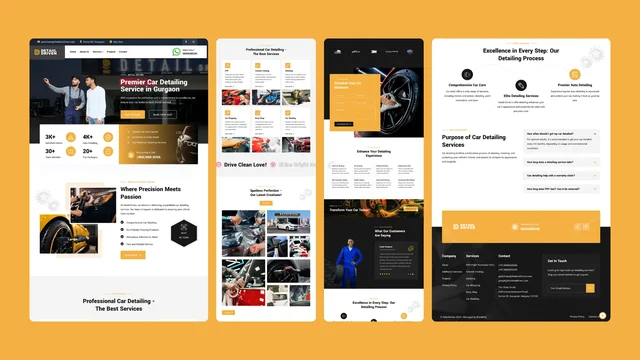

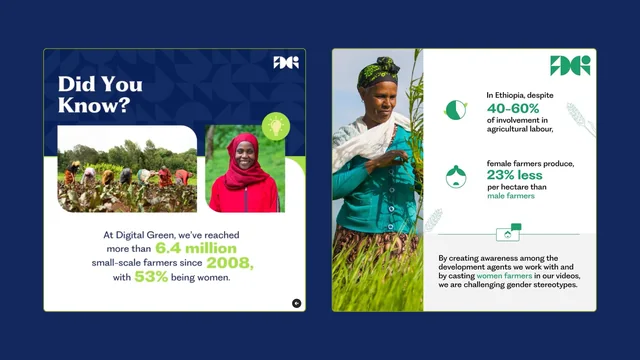
These are delivery projects, listed as delivered. What they establish is the kind of system this work sits inside — conversational interfaces, decision flows, and structured information made usable.
- All work Every project, with what was delivered on each
- Companies we work with Who we have built alongside
Questions
Asked before commissioning one.
- What is a RAG knowledge base?
- A set of approved business sources prepared so an AI system can retrieve the relevant passage and answer from it. The retrieval part is what makes the answer specific to you; the approval part is what makes it trustworthy.
- How does RAG actually work?
- The question is used to find the passages most likely to bear on it across the sources in scope for that reader. Those passages are given to the model as the material to answer from, and the answer is written out of them. What the model contributes is the sentence; what your sources contribute is the content.
- Can it use our website?
- Yes, and it is often the first source in — but rarely the only one. A published page answers what you tell customers. The question your team actually asks is what happens when a customer pushes back on it, and that answer usually lives somewhere else. Finding out where the public page and the internal practice disagree is one of the more useful things the first pass produces.
- Can it use PDFs and Word documents?
- Yes, where the text can be read out of them. A born-digital PDF is straightforward. A scan of a printed page is an image of text and needs a conversion step first, which is worth knowing before it is counted as a source.
- Can it connect to our existing tools?
- That depends on what each tool can expose, and we check before designing around it. Some have an API, some have a documented integration, some have an export and nothing else. We would rather tell you a source needs a different route in than discover it mid-build.
- Can answers show where they came from?
- Yes, and it is the part we would argue hardest to keep. Showing the passage behind an answer is what lets somebody check it in five seconds instead of trusting it, and it changes how a team uses the system.
- What happens when two sources disagree?
- It should surface the disagreement rather than resolve it silently. Which of the two wins is a business decision — usually by authority or by recency — and it gets made once and encoded, rather than guessed at differently every time the question is asked.
- Can different teams see different knowledge?
- Yes, and most businesses need it, because the genuinely useful material is the material not everyone should read. Which reader reaches which source is designed with you, and the layer follows the permission model of the system around it rather than inventing a competing one.
- Can this connect to a chatbot or a voice agent?
- That is much of the point of building it as its own layer. The same approved sources can answer in text, out loud on a call, or inside an automation that consults them before acting.
- Can our existing documents be migrated?
- Usually, and the first pass tells you which ones will be awkward. Scanned documents, spreadsheets whose meaning lives in their layout, and pages whose content is really an image all need a decision rather than an import.
- Does Branditify need access to our documents?
- To scope one, much less than people expect: a list of what exists, who owns each of them, and a small representative sample. Deciding which sources are authoritative is a conversation with the people who own them, and most of that can happen before anybody hands over a library.
- Who owns the knowledge base and the documents?
- You do — the sources, the configuration, the question set and any code written for you. It is handed over as agreed in scope.
- How long does a knowledge system take to build?
- It depends almost entirely on the state of your sources, so we scope it after the first pass over them rather than quoting a duration before seeing them. A narrow set of clean, owned sources answering a defined range of questions is a materially different job from consolidating knowledge that lives in four systems and disagrees with itself.
- What happens after it launches?
- The questions it handled badly are the useful output of the first month. Those get reviewed, and the fix is usually a source rather than a model — a missing document, an ambiguous clause, or two versions nobody had reconciled.
Start here
Bring us the question your team keeps looking up.
The most useful first conversation is not about models. It is about which questions repeat, where those answers currently live, and who gets to decide which version is right.
- The questions your team answers most often
- Where those answers live today
- Who owns each source, and who decides which version counts
- What should happen when the answer is not written down
- Which surfaces need to answer from it