
SEO & AEO Checker
See what search and answer engines actually read.
A page can look finished to a person while the two machines that decide whether anyone finds it are reading something much thinner. This is what each of them takes from a page, which signals have to agree, and what a check can honestly tell you.
The dedicated checker is not built yet. Seven of its checks run today inside the Free AI Brand Audit, and this page says which.
Reads as a competent, considered firm. Nothing is wrong with it.
- Title“Northstar Advisory — Home”Weak signal
- H1“Built for what comes next.”Weak signal
- CanonicalSelf-referencingClear
- IndexableNo robots restriction foundClear
- Topic agreementTitle, H1 and body do not name the same subjectNeeds review
- Direct answerNo sentence answers a question outrightMissing
- Question structureNo question appears as a headingMissing
- EntityNo Organization markup naming the firmMissing
- RelationshipNothing states who the service is forMissing
- FAQ schemaPresentClear
Two different questions
One asks whether you can be found. The other asks whether you can be quoted.
They overlap and they are not the same job, and the difference decides what is worth fixing first.
- SEOCan this be discovered, understood and ranked?Crawl access, indexability, what the page declares itself to be, how it relates to the rest of the site.
- AEOCan a specific answer be taken from this?Whether a question is asked and answered plainly, and whether it is clear who is answering and for whom.
- What is SEO?
- Search engine optimisation is the work of making a page discoverable, understandable and relevant enough to be ranked for the searches it should serve. It covers whether a page can be reached and indexed at all, what its markup says it is about, how it relates to the pages around it, and whether the content matches what somebody searching for it actually wanted.
- What is AEO?
- Answer engine optimisation is the work of making a useful answer, and the entity behind it, clear enough to be extracted and attributed. Where SEO asks whether a page can be found and ranked, AEO asks whether a specific question is answered plainly enough on it that a system summarising the topic can lift the answer and say where it came from.
- What is an AEO checker?
- A tool that inspects a page for the signals answer engines rely on — a direct answer near the top, questions structured as questions, markup identifying the organisation, and content that states what a thing is and who it is for. What an honest one checks is the page. What it cannot check is whether any engine has used it.
Illustrative checker · sample page
Three readers, three different pages.
Three readers, three different pages. The person sees a firm worth talking to. The search engine sees a page whose own signals disagree about its subject. The answer engine finds FAQ markup and nothing it can lift — which is the trap the next chapter is about.
A person
Lands, scans, decides in seconds whether this is the right page.
- OverallReads as a competent, considered firm. Nothing is wrong with it.Clear
A search engine
Reads the markup to work out what the page is about and whether it may be shown.
- Title“Northstar Advisory — Home”Weak signal
- H1“Built for what comes next.”Weak signal
- CanonicalSelf-referencingClear
- IndexableNo robots restriction foundClear
- Topic agreementTitle, H1 and body do not name the same subjectNeeds review
An answer engine
Looks for a specific answer it can lift, and something that says who is answering.
- Direct answerNo sentence answers a question outrightMissing
- Question structureNo question appears as a headingMissing
- EntityNo Organization markup naming the firmMissing
- RelationshipNothing states who the service is forMissing
- FAQ schemaPresentClear
What search reads first
A page can only be about one thing at a time.
The commonest search problem on a commercial page is not a missing tag. It is three tags describing three different pages.
- Title“Northstar Advisory — Home”A company name and a page type. No subject.
- H1“Built for what comes next.”A sentiment. Still no subject.
- BodyFinancial planning for business ownersThe actual subject, mentioned nowhere above it.
- Internal linksLinked from the homepage as “Services”A generic label, so the surrounding site does not name it either.
Nothing here is broken. Every element is present and well written. They simply do not agree about what the page is for, and agreement is the signal — not any one of them on its own.
The fix
Title, H1 and the first line each name the same subject, in the words somebody would search for. That is usually the whole fix, and it costs an afternoon.
- Can a checker tell me why my page is not ranking?
- Not on its own, and be careful of one that says it can. Ranking depends on competition, the rest of your site, links and search data that a single page cannot see. What a page-level check can tell you is whether the page has made itself understandable at all — and when title, heading and content disagree about the subject, that is worth resolving before looking anywhere else.
What an answer engine looks for
Something it can lift, and something that says who said it.
Answer engines summarise. A page that never states anything plainly gives them nothing to summarise.
The answer is in here somewhere
For many business owners, the question of what happens to what they have built is one that sits at the back of the mind for years before it is ever brought to a professional. There are a number of considerations — succession, liquidity, tax exposure — and the right approach depends heavily on circumstances.
Weak signalThe answer, first
Financial planning for a business owner is the work of aligning personal finances with the value tied up in the business — succession, liquidity and tax exposure treated as one plan rather than three. It usually begins with a valuation and a timeline for exit.
Clear- 01A question asked as a questionA heading somebody would actually type.
- 02An answer in the first sentencesNot after four paragraphs of context.
- 03Something that states what it isA definition, in plain words.
- 04Something that says who and for whomNamed organisation, named audience.
The second version is not shorter or simpler. It just leads with the answer instead of arriving at one, and that single ordering decision does more for extraction than any markup.
- What makes content easy for answer engines to extract?
- Leading with the answer. A question phrased the way somebody would ask it, followed immediately by two or three sentences that answer it outright, then the detail. Add something that states plainly what the thing is and who it is for. Markup helps a system find that structure, but it cannot create it — if the page never states the answer, nothing can extract it.
The most common wrong conclusion
FAQ schema is present. The page still answers nothing.
This is the trap in every AEO checklist that scores by counting markup, and the reason a green tick is not the same as a good page.
What a markup check finds
FAQPage schema: present. Four question–answer pairs. Valid JSON-LD.
ClearWhat is actually in it
“Do you work with business owners?” — “We work with a wide range of clients across many sectors and would be delighted to discuss your requirements.”
Weak signalStructurally perfect. It answers nothing, so there is nothing to extract, and marking it up has not changed that.
Structured data describes content. It cannot substitute for it. A checker that scores schema presence will call this page answer-ready, and it is not — which is why states on this page are read from what the content says, not from whether a tag exists.
- Does FAQ schema improve AEO?
- Only when the answers underneath it are real. Schema tells a system where to look and what the shape of the content is; it makes no claim about quality, and it cannot make a non-answer extractable. FAQ markup around four evasive paragraphs is worth roughly nothing, and it will still pass most automated checks.
- Does every page need FAQ schema?
- No. It belongs on pages that genuinely answer recurring questions, and adding it to a page that does not is markup describing something that is not there. More schema is not better schema — the useful test is whether each type honestly describes what is on the page.
Who is answering
An answer with nobody behind it is hard to attribute.
The part most page-level checklists skip, and the part that decides whether a system summarising a topic can say where an answer came from.
- Northstar Advisoryfinancial advisory firmMissing
- Northstar Advisoryfinancial planningWeak signal
- Financial planningbusiness ownersMissing
- This pagethe firm’s servicesClear
Three of these four relationships are stated nowhere a machine can read them. They are obvious to a person who reads the page, and obvious is not the same as stated.
- What is GEO?
- On this page GEO means entity clarity: whether a system can tell what an organisation is, what it provides, who it provides it for, and how this page relates to the rest of what it does. It is the difference between a page containing an answer and a page that can be attributed to somebody. It is not a ranking mechanism and it is not a guarantee of anything.
What a page can and cannot tell you
Reading a page answers some of this. The rest needs data a page does not have.
The whole category is built on blurring this line, so it is worth drawing it clearly before anybody runs anything.
Checkable by reading the page
- Whether a title, description and canonical exist and what they say
- Whether the page declares itself indexable
- Whether title, heading and content agree about the subject
- Whether a question is asked and answered plainly
- Whether structured data is present and appropriate to the content
- Whether the organisation and what it offers are identified
Needs search or answer-engine data
- Whether Google has actually indexed the page
- What it ranks for, and where
- Whether ChatGPT, Perplexity or AI Overviews cite it
- How authoritative the site is judged to be
- Real-world loading performance for actual visitors
- Whether any of this changed anything commercially
- Can an AEO checker tell if ChatGPT will cite my website?
- No, and nothing that only reads your page can. A page-level check can tell you whether there is a clear answer on it and whether the organisation behind that answer is identified — the conditions that make citation possible. Whether any particular engine has used it is a question about that engine, answerable only by asking it, and it changes constantly. Treat a tool claiming otherwise with care.
- What is the difference between indexable and indexed?
- Indexable means nothing on the page prevents a search engine from including it — no noindex, no blocked crawl, a canonical pointing at itself. Indexed means it has actually been included. A page-level check can confirm the first with certainty and cannot confirm the second at all, which is why the honest word is indexable.
Where this stands
The dedicated checker is not built. Seven of its checks already run.
Stated here rather than discovered after clicking. The Free AI Brand Audit is a working tool, and two of its six dimensions are exactly the territory this page is about.
Running today, inside the Free AI Brand Audit
- Title length against a 30–65 character target
- Whether a meta description exists
- Whether a canonical URL is set
- Whether JSON-LD structured data is present
- Whether Organization schema identifies the business
- Whether FAQ schema is present
- Whether a concise answer block sits near the top
What a dedicated checker would add
- Agreement between title, heading and content about the subject
- Whether structured data is appropriate rather than merely present
- Whether an answer is actually answered, not just marked up
- Entity relationships — what the organisation is, and for whom
- Internal linking context around the page
It is a smaller gap than it looks, and it is a real one. The seven checks above are deterministic and available now; the five below need reading comprehension rather than tag detection, which is the work.
The same page, a different question
One asks how you come across. This one asks what can be read.
They look at the same markup and want different things from it.
“Built for what comes next.”
- Free AI Brand AuditThe headline does not say what the business does, so a visitor cannot tell what is being offered.Free AI Brand Audit
- SEO & AEOThe H1 does not establish the page topic, so nothing tells a search engine what the page should be found for.This page
The same sentence, failing two different readers for two different reasons. Fixing it once helps both, which is why running the brand audit first is not a detour.
- Is a brand audit the same as an SEO audit?
- No. A brand audit asks whether a business presents itself clearly and credibly to a person. An SEO and AEO check asks whether a page is structured so machines can understand what it is about and take an answer from it. They inspect overlapping things — a headline, a description, structured data — and judge them against different standards.
Two different jobs
A check finds what is visibly missing. The work is deciding what to do about it.
A checker is not a small version of a search programme, and a search programme is not a longer list of warnings.
A check
Best when you want to know whether a page has made itself understandable
- One page at a time
- Signals you can verify yourself
- A short list of what is missing
- Free, and immediate
SEO & AEO work
Best when the question is what to publish, in what order, and how the site should be organised
- What the site should rank for and why
- How pages relate to each other
- Content built around real questions
- Technical work carried out rather than reported
- Measured over time against search data
- Is a checker enough, or do I need professional SEO work?
- If the findings are mechanical — a missing description, a canonical pointing at the wrong place, a heading that does not name the subject — fix them yourself; that is a good afternoon's work and no agency is needed. Professional work starts where the questions stop being about one page: what the site should be found for, how the pages relate, and what has to be written that does not exist yet.
What to fix first
Three severities, and most findings are not the first one.
A list of thirty equal warnings is how a check gets ignored. These are ordered by what they cost you.
- BlockerA commercial page is not indexableA noindex or a canonical pointing elsewhere. Nothing else matters until it is resolved, because nothing else is being read.Whoever maintains the site.
- ImportantTitle, heading and content disagreeThe page cannot be understood to be about anything in particular, so it competes for nothing in particular.An afternoon of writing.
- ImportantNo answer, anywhere on the pageNothing states plainly what the thing is, so there is nothing for an answer engine to take.A writing decision, not a technical one.
- ImprovementNo Organization markupThe answer exists but nothing names who is giving it.A small developer task.
- ImprovementFAQ answers could be more directWorth doing once the first three are done, and worthless before that.Editing.
- What should I fix first?
- Anything stopping the page being read at all — a noindex, a wrong canonical, a blocked crawl. Then agreement: make the title, heading and opening line name the same subject. Then the answer itself: state plainly what the thing is, near the top. Structured data comes after all of that, because it describes content and cannot compensate for content that is not there.
Background
Selected web & search-related work.
Projects where the site structure and the content were built together, each listed with what was delivered.


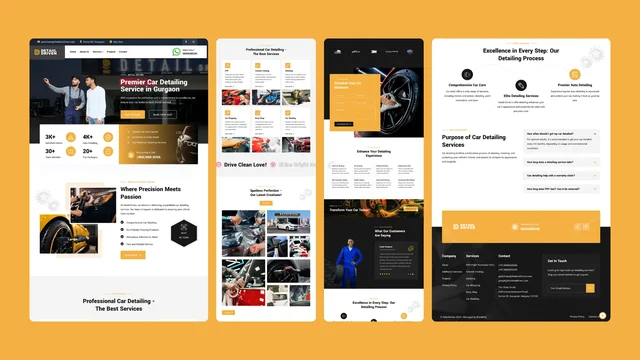
These are delivery projects, listed as delivered. No ranking, traffic or citation figure appears on this page, because none of it was measured by anything shown here.
- All work Every project, with what was delivered on each
- Companies we work with Who we have built alongside
Questions
Asked about checking a page.
- Does the checker look at a whole site or one page?
- One page. A site-wide view needs a crawl and search data, which is a different piece of work — and most of what goes wrong on a commercial page goes wrong on that page.
- Does it check backlinks?
- No. Links pointing at you from elsewhere cannot be seen by reading your own page, and anything claiming otherwise is using third-party data rather than checking your site.
- Does it check Core Web Vitals?
- Not as field data. Response time and payload size are observable when a page is fetched; what real visitors experience on real devices comes from separate measurement.
- Can it check JavaScript-rendered content?
- Only what is present in the HTML that comes back. If your content is assembled in the browser after load, a fetch-based check sees the shell — which is itself useful to know, because some crawlers see the same thing.
- Is more structured data better?
- No. Each type should honestly describe what is actually on the page. Schema for things that are not there is a description of nothing, and it is the easiest way to pass a checker while helping no one.
- Do I need to be technical to act on this?
- Mostly not. The three findings that matter most on a typical commercial page — a heading that does not name the subject, no plain answer near the top, no description — are writing, not engineering.
- Will fixing these get me ranked?
- They remove the reasons a page cannot compete. Whether it then does depends on the competition, the rest of the site and what people are actually searching for — none of which a page-level check can see.
- How often is it worth checking a page?
- When it changes materially. Redesigns are the usual culprit: a new template frequently drops a description, a canonical or the structured data on the way out, and nobody notices for months.
- Can I check a competitor’s page?
- Anything public can be read the same way. It tells you which signals they have bothered with, which is a reasonable thing to know and not the same as knowing why they rank.
- What does Branditify do with the URL?
- The checks that run today run inside the Free AI Brand Audit, which fetches the page you give it and returns the result to your browser. Nothing on this page submits anything.
Start here
Check the page before you guess what search needs.
Seven of these checks run today. The rest of this page is what to look for yourself, and it is most of the value.