
Branditify for travel agencies and tour operators
A destination is not a trip. A trip is what somebody can say yes to.
Every tour page shows the place. What a traveller is actually working out is which parts are fixed, which parts still depend on them, and whether this operator is the one to ask. Branditify builds the site that answers that, and the systems that hold the enquiry it produces.
The open column on any itinerary cannot be written until you know who is travelling. That is what an enquiry is for.
Illustrative interface · sample data
What Branditify actually builds for a travel business
The site travellers decide on, and the systems behind the enquiry.
Two different purchases. One decides whether a traveller can tell your trip apart from four others; the other decides what happens to the enquiry that follows.
Services
What Branditify does for the travel company.
Chosen for what an operator genuinely needs, and stated with what each one does not cover.
Premium Websites
The site is a wall of destination tiles and a PDF. A traveller comparing four operators cannot tell what is different about yours, so the only thing left to compare is price.
Trip pages built the way a traveller decides — the route and the pace, what is settled and what still depends on them, who the trip suits, and an enquiry that carries enough for a real reply.
A traveller can tell whether the trip is for them before they write.
Usually the largest single piece of work.It is the operator’s own website. Whether it also takes bookings depends on whether there is real availability to expose — a separate decision this page answers rather than assumes.
Premium WebsitesSEO & AEO
The answer to thin traffic is usually taken to be more destination pages, so the site ends up with ninety of them and authority on none.
A search architecture around what travellers actually search — the trip style, the route, the season, the question they are stuck on — with a destination page only where there is a real trip and a real decision behind it.
Fewer pages, each of which has a reason to exist.
No ranking position is promised, and mass-generated city and country pages are the thing this is meant to prevent.
SEO & AEOContent
The itinerary PDF is carrying the whole argument, so nothing that makes the trip worth choosing is visible until somebody has already asked for it.
Trip pages, route and season guides, honest inclusion and exclusion detail, and answers to what a traveller asks before they will send an enquiry.
The PDF stops being the only place the trip is explained.
Written from trips you actually run. Nothing is invented to fill a page, and no price or availability is published that a person has not confirmed.
ContentSocial Media
Every departure produces more material than the rest of the quarter, and it is posted once from whichever phone was closest.
A content system that treats a departure as the story it is — the recce, the route, the days on the ground, the travellers’ own words where they have agreed to it — so the feed shows how you operate rather than only where you went.
Recent trips keep arriving in front of people still deciding.
A publishing system. No follower, reach or engagement number is promised.
Social MediaContent Creatives
The trip exists as a Word document, a folder of photographs and a proposal that gets rebuilt by hand for every enquiry.
Route maps drawn as design rather than screenshots, trip layouts, proposal and campaign assets that carry the same trip in the same language as the site.
The proposal stops starting from a blank page.
Assets for presenting the trip. It is not itinerary operations or supplier contracting.
Content CreativesCustom Software
Building one itinerary takes four tools and a spreadsheet, and the same trip gets rebuilt from scratch every time somebody asks for it with two days fewer.
Where the workflow genuinely warrants it: itinerary building from reusable components, supplier and rate records the team actually maintains, departure and allocation logic, and whatever has to connect to whatever.
The fortieth version of a trip stops costing what the first one did.
Scoped from your real process. No provider, GDS or supplier connection is assumed to exist until it has been confirmed — see the decisions below.
Custom SoftwareAlmost nobody needs all of these at once. The usual order is the trip pages that let a traveller decide, then the search architecture that brings the right ones to them, then the discipline of turning delivered trips back into material.
Systems
What the travel company can operate with.
Used where the volume or the way the operator works genuinely calls for them, and left out where it does not.
CRM
Enquiries arrive by form, by phone, from a marketplace and from a message at eleven at night, and what each traveller actually wants lives with whoever replied first.
One record per enquiry — traveller or group, destination, trip type, travel window, departure city, source, stage, owner and next action — with the context attached rather than remembered.
Nothing goes quiet for a week because everybody assumed somebody else had it.
Usually the first system a travel business needs.It holds the enquiry and the relationship. It is not a reservation system: it does not hold supplier inventory, build vouchers, apply markups or settle payments — a travel booking system does that, and the two are not the same thing.
CRMClient Portal
The confirmed itinerary went out as a PDF in March, changed twice in April, and nobody can say which version the traveller is actually holding.
A controlled place for the confirmed traveller — the current itinerary, the documents you choose to publish, their requests, and a checklist for whatever they still owe you.
One version of the trip, and everybody is looking at it.
It is a traveller-facing surface. It is not a reservation system, it holds no supplier inventory, and it is not an immigration or visa portal — a document line records what has been supplied, nothing more.
Client PortalBooking Platform
Getting a planning call into the diary takes eight messages across three time zones, and half of them are about time zones.
Bookable slots for the appointments an operator actually runs: a first trip-planning call, a follow-up once the itinerary has moved, a review before departure.
The conversation that qualifies the trip stops being a negotiation about calendars.
This schedules appointments against real availability. It is not a travel reservation engine — no flight, hotel or seat inventory, no GDS, no PNR, no dynamic packaging.
Booking PlatformDashboards
Nobody can answer “which season are we actually filling” without three people opening three files.
Bounded visibility over what the systems already hold — where enquiries came from, which trips are at which stage, and how the work is spread across the team.
The question gets answered from a screen instead of a meeting.
It reports what is genuinely recorded. It does not invent an occupancy, conversion or revenue figure that nothing feeds.
DashboardsA team running a few departures a season can hold all of this in a spreadsheet honestly. These earn their place when more than one person is answering enquiries, or when the same traveller comes back and nobody can remember what they wanted last time.
The first problem
Four destination tiles, and a traveller who still cannot choose.
A place name and a photograph is where almost every travel site starts and, for a great many of them, also where it stops. The traveller looking at it has a specific question the tile cannot answer: is this trip for me, and how much of it is already decided?
A place, a photograph and a form. The three questions that decide the enquiry are all somewhere else.
The same Rajasthan, described so a traveller can place themselves in it — and so the ones it does not suit stop writing.
Illustrative. Real trip pages are written from departures actually operated — no booking count, traveller number, rating or result is added to make one look stronger.
How should tour operators present itineraries online?
Day by day, with the two columns a traveller is actually comparing: what the price settles and what still depends on them. Route and nights per stop, the pace, who the trip suits and who it does not, and an honest exclusions list — flights, rooms, optional experiences — stated as plainly as the inclusions. Most sites publish inclusions and leave exclusions to the PDF, which is why the same three questions arrive by email on every enquiry. Publishing both does the qualifying for you: the travellers who write have already accepted the shape of the trip, and the ones it was never going to suit have quietly gone elsewhere, which is a good outcome for both of you.
The second problem
“Send package.”
It is the message every operator gets, and there is nothing wrong with the traveller who sent it — nothing on the page asked them for anything else. What follows is a week of back-and-forth establishing things one screen could have collected.
The field list belongs to the operator, not to a template. An inbound DMC taking agent enquiries asks different questions from an operator selling scheduled departures direct.
What should a travel enquiry form ask?
Enough to write a real reply, and nothing that makes a serious traveller abandon it. Destination or trip, roughly when and for how long, how many are travelling, which city they are starting from, and what kind of trip they are after. That is usually the whole list, and it is the difference between a proposal and a guess. Exact budget is the field most often demanded and most often counter-productive at first contact — many travellers genuinely do not have a number yet, and the ones who do will give it on a call. Passport numbers, dates of birth and visa details have no business on a first enquiry at all: they are needed at booking, they carry real handling obligations, and asking for them early costs trust rather than time.
The third problem
The same trip, sold two ways, built twice.
Most operators sell both a scheduled departure and a version of it built around one party — and most websites treat them as two unrelated products, in two unrelated sections, maintained separately until they quietly disagree with each other.
Illustrative structure. Which model an operator sells, and whether either is bookable online rather than by enquiry, is a business decision this page describes rather than prescribes.
Fixed departure or custom itinerary — which should a tour operator build the site around?
Usually both, and usually as one product rather than two. A fixed departure is a route the operator has already decided, sold by the seat on set dates, which is what makes it easy to market and easy to publish. A custom trip is the same knowledge rebuilt around one party, with dates, pace and stays chosen for them. The mistake is treating them as separate catalogues: the underlying trip is the same, so a site is better built around the route and the experience, with two doors into it — join this departure, or make it yours. That way one page carries the argument, one team maintains it, and the traveller sees a coherent operator rather than two half-finished sections.
Before and after the deposit
The same itinerary is doing two completely different jobs.
Before a traveller commits, the itinerary is a sales document answering “is this for me”. Afterwards it is an operating document answering “what has been agreed”. Most operators publish one artefact and ask it to do both, which is why the public page is too vague to decide on and the confirmed traveller is still emailing to ask what time the car comes.
Whether this lives in a portal, an email and a shared folder, or something built for the purpose, depends on how many departures are running at once. A few a season does not need a system.
Can travellers access their itinerary and documents in a portal?
Yes, and it solves a specific problem rather than a general one. The value is not storage — it is that there is exactly one current version, so nobody is holding a March PDF of an April itinerary. A portal can carry the confirmed day-by-day plan, the documents the operator chooses to publish, the traveller’s requests, and a checklist of what they still owe: passport copy supplied, insurance details supplied, dietary notes received. Recording that a document has been supplied is different from advising on it — an operator can tell a traveller what a destination requires and where the official source is; it cannot assess eligibility or promise a visa, and no system described here does.
Where the traveller comes from
Marketplaces are good at finding travellers. They are not built to hand you one.
Listing platforms do something genuinely difficult and do it well: they put a trip in front of somebody who was already looking. What they do not do — because it is not what they are for — is leave the operator holding the relationship afterwards.
What a platform passes on varies by platform and by contract. Nothing here assumes an operator receives traveller data it has not actually been given.
Website or marketplace — where should a tour operator put the effort?
Both, doing different jobs, and the honest version of this argument includes the part the “go direct” advice usually leaves out. A marketplace supplies demand the operator did not have to generate, at a commission the operator did not have to spend upfront. An owned site supplies something else: room to explain a trip properly, search presence for the route rather than the category, and a traveller you can talk to again next year. Direct is not free either — the acquisition has to come from somewhere, and it has a cost that is simply harder to see than a commission line. The useful question is not which channel wins but what each one leaves behind: a marketplace leaves you a completed booking, and your own site leaves you a relationship and the context to make the next trip easier to sell.
The questions operators actually ask
Six decisions, answered without selling you the larger one.
Each of these has an expensive default answer and a correct one, and in this industry they are frequently different.
Does every tour operator need a booking engine, and can a travel site show live prices?
No, and usually not. A booking engine exists to take money against availability that genuinely exists — which means real inventory, held somewhere, that the site can check and decrement. Scheduled departures with a fixed seat count qualify. Custom itineraries assembled from suppliers per traveller usually do not, because there is nothing to expose until somebody has been asked. As for live prices: a page can only show one if a real provider is returning it, under a commercial agreement, within rate limits, with defined booking and cancellation behaviour. Where that is not true, “from” pricing and confirmation in the proposal is the honest presentation — and inventing a live price, or a seats-left counter, is a straightforward way to lose a traveller at the moment they check.
Where this page stops
Four things a trip touches, and is not.
A tour includes hotels, moves people in vehicles, sometimes carries a wedding party and always involves documents. Each of those belongs to somebody, and it is worth being exact about which parts are the operator’s business and which are somebody else’s.
Tour operator, hotel, wedding planner or fleet — which page applies?
Ask what the business actually sells. A tour operator sells the trip: the route, the itinerary, the traveller relationship, and the judgement about which stops in which order. A hotel sells the stay — a property, rooms, dates and its own direct guest demand — and a tour including a hotel does not make the operator one. A wedding planner sells a wedding: a couple, a family, functions and hospitality, where the travel is one part of a much longer relationship. Fleet management owns vehicles, drivers and dispatch, which an operator needs only if it actually owns the vehicles rather than contracting them. Branditify keeps these as separate Industry pages because the buyer and the searches genuinely differ, and businesses that do two of them should read both.
Relevant capability, described exactly
What Branditify has actually built.
Product surfaces and services Branditify builds, operates and offers — which is a different kind of statement from a client outcome, and is presented as one rather than dressed up as a case study.
CRM
Enquiries, stages, owners and next actions — the opportunity layer this page recommends.
Branditify’s own product capability.
View CRMClient Portal
Controlled client-facing documents, requests, updates and current versions.
Branditify’s own product capability.
View Client PortalPremium Websites
The service that turns a destination tile into a trip a traveller can decide on.
A Branditify service, delivered to scope.
View Premium WebsitesCustom Software
The service for workflows that standard tools genuinely cannot carry.
A Branditify service, scoped from the real process.
View Custom SoftwareSelected work
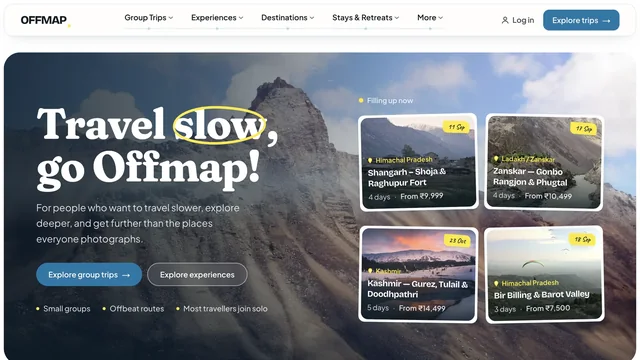
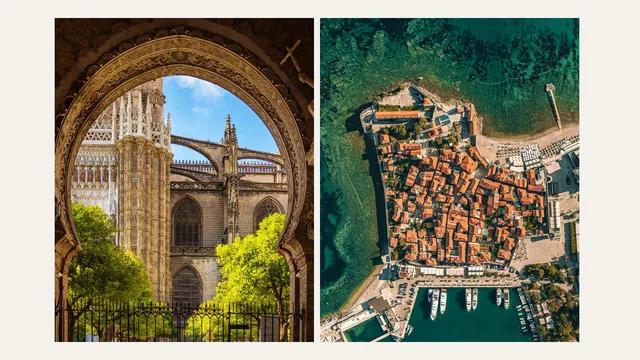
Travel businesses we have built for.
Both are approved cases whose own records name this industry: a travel commerce platform, and social content for an online travel brand.
Questions operators actually ask
The rest of it, answered directly.
What should a travel agency or tour operator website include?
The trips you actually run, each with its route, length, pace and format; who a trip suits and who it does not; what the price settles and what still depends on the traveller; how you work and who they would be dealing with; and an enquiry that captures enough for a real reply. A destination grid and a contact form is a brochure with a form attached.
How should tour operators present itineraries online?
Day by day, with inclusions and exclusions given equal weight. Route and nights per stop, the pace, the group size where it matters, and an honest list of what is not covered — flights, room type, optional experiences. Publishing exclusions does the qualifying for you rather than leaving it to three emails per enquiry.
What should a travel enquiry form ask?
Destination or trip, roughly when and for how long, how many are travelling, the starting city, and what kind of trip they want. Exact budget is usually counter-productive at first contact. Passport numbers, dates of birth and visa details do not belong on a first enquiry — they are needed at booking and carry real handling obligations.
CRM or travel booking software — what is the difference?
A CRM holds the commercial relationship: enquiry, traveller, trip type, window, stage, owner, next action. Travel booking software holds the transaction: supplier records, reserved components, vouchers, markups, payment schedules. They are complementary, and an operator can run bookings well while losing enquiries it never noticed arriving.
Travel website or booking engine — which does an operator need?
A website explains trips, establishes fit and takes enquiries. A booking engine takes money against availability that genuinely exists. Scheduled departures with a fixed seat count can support one; custom itineraries assembled per traveller usually cannot, because there is nothing to expose until somebody has asked.
Does every tour operator need live booking?
No. Enquiry-led selling is the correct model for a great deal of custom and high-value travel, where the proposal is the product. Live booking earns itself when there is real held inventory, when the trip is standardised enough to sell without a conversation, and when the volume justifies maintaining it.
Fixed departure or custom itinerary?
Many operators sell both, and the site is usually better built around the route with two doors into it — join this departure, or make it yours — than as two separate catalogues. The underlying trip and the operator’s expertise are the same; only the constraints differ.
Can supplier or GDS APIs be connected?
Sometimes, and it is a research question before it is a build question. Which provider, whether an API exists at your commercial tier, what it exposes, its rate limits, and what it requires on cancellations and refunds are all confirmed before anything is designed. No provider connection is assumed or claimed until it has been checked for your account.
Can a travel website show live prices and availability?
Only where a real provider returns them under a real agreement. Where that is not in place, indicative pricing with confirmation in the proposal is the honest presentation. Invented live prices and seats-left counters are a reliable way to lose a traveller at the moment they check.
Can traveller documents be managed digitally?
The record can. A system can hold what has been supplied, what is pending and what has been received. Requirements themselves should come from the official source. Assessing eligibility, verifying a passport or promising a visa outcome is regulated advice, and nothing described here does it.
Can travellers access their itinerary in a portal?
Yes, and the value is that there is one current version rather than a chain of PDFs. A portal can carry the confirmed plan, the documents you choose to publish, the traveller’s requests and their outstanding checklist. It is not a reservation system and holds no supplier inventory.
Does a tour operator need a mobile app?
The business almost never does. A traveller-facing app can earn itself when confirmed travellers use it repeatedly during a trip, when offline access to the day plan matters, or when in-trip notifications are part of the service. Before departure a responsive site and a portal do the same job.
Website or OTA and marketplace for tour operators?
Both, doing different jobs. A marketplace supplies demand you did not have to generate, at a commission you did not have to spend upfront. Your own site gives room to explain a trip, search presence for the route rather than the category, and a traveller you can talk to again. Direct is not free either — its acquisition cost is just harder to see than a commission line.
How can SEO help a travel company?
By reaching travellers searching the route, the trip style or the question they are stuck on rather than the destination name everybody is competing for. Fewer, better pages — a real trip, a real decision, something to say — outperform a large library of destination descriptions.
Should a travel company build lots of destination pages?
No. Thin destination pages compete with each other and dilute whatever authority the site has. A page earns its place when there is a trip behind it, a decision to help with and something not already said elsewhere on the site.
Tour operator or hotel — which page applies?
A hotel sells the stay: a property, rooms, dates and its own direct guest demand. A tour operator combines accommodation with transport, experiences and an itinerary, and sells the trip. Including a hotel in a tour does not make an operator a hotel.
Tour operator or wedding planner?
A wedding planner sells a wedding — a couple, a family, functions and hospitality across a long relationship. A tour operator sells the trip. A destination wedding involves both, and neither becomes the other by touching the same flights.
Travel operator or fleet management?
A tour operator owns the traveller-facing trip and itinerary. Fleet management owns vehicles, drivers, assignment and dispatch. An operator that owns its coaches needs both; one that contracts every transfer needs only the first.
Can old traveller and enquiry data move from spreadsheets?
Usually. Spreadsheets, inboxes and most tools export cleanly, and travellers, trips and enquiry history transfer. The part that does not is whatever was never written down. A migration is a good moment to decide what the business actually needs to remember.
When does custom travel software make sense?
When the process itself is the problem: itineraries rebuilt from scratch for every variation, supplier and rate records nobody can keep current, departure and allocation logic no standard tool expresses, or several systems that have to agree. If nobody is losing hours to the gaps between tools, a custom build is an expensive way to reorganise a spreadsheet.
Who owns the website, systems and data after the build?
The travel company — code, content, traveller records and accounts in its own name, on infrastructure it controls, with no dependency on Branditify to keep running. It matters especially for an operator whose discovery already runs through platforms it does not own.
What should a travel company digitise first?
Whatever is currently losing trips. For most operators that is the trip page and the enquiry — somewhere a traveller can decide, and a form that captures enough to reply properly. The enquiry record comes next. Booking, integrations and custom workflow come last, and only where there is something real to connect.
If this is the business you are running
Start with one trip you already sell.
The first conversation is usually about a single departure: the route and why it is that route, who it suits, what the price settles and what it does not, and what a traveller would need to see to choose it over the four other versions of Rajasthan they are looking at. That is normally enough to know what the site should carry and what to build first.