
College Management System
On the programme is not the same as registered for the term.
A custom college system built around one semester record — the programme a student belongs to, the term that is open, the courses they are actually registered for, and what is still blocking the term from being complete.
Semester recordA. Mehta · BBASEM-2048
Business Administration · BBAActive
- 01
- 02
- 03
- 04
- 05
- 06
- CoreFinancial Accounting IIBBA-301Confirmed
- CoreBusiness StatisticsBBA-302Confirmed
- CoreOrganisational BehaviourBBA-303Confirmed
- CoreOperations ManagementBBA-304Confirmed
- ElectiveMarketing AnalyticsBBA-3E1Selected · awaiting review
- Semester registration
- Not complete
- 4 of 5 confirmed
- Award
- Determined by the institution
- Not derived from this term
Four cores confirmed and the elective selected but not reviewed. The programme is active, the student is here, and the term is not registered — which is the state most college administration actually spends its time in.
ILLUSTRATIVE INTERFACE · SAMPLE DATA
Programme and term
The programme persists. The term is rebuilt every time.
A school enrols a child once and rolls the year forward. Higher education re-establishes the academic record every term — new courses, new registrations, new attendance, a new result — against a programme membership that does not change.
- The programmeLong, and mostly unchanging.Which award the student is working toward, and the structure the institution defines for it.
- The semester recordShort, and rebuilt each term.One period: what was offered, what this student registered for, what accumulated, and how it closed.
- The next termA new record, not a continuation.Opened by the institution when it decides to, against the same programme.
Where the student came from — an admissions process, a CRM, a university allocation, a spreadsheet — is a scoping decision. We confirm what each source can expose before defining the connection.
What is a college management system?
A system that operates a college’s academic record: the programmes it runs, the students enrolled on them, the terms those programmes are delivered in, the courses offered each term, which courses each student is actually registered for, the attendance and assessment that accumulate, and how a term closes and the next one opens.
What is the difference between a college management system and a school management system?
The academic period model. A school enrols a student into a class for a year and carries them forward; a college re-establishes the record every term against a programme, with courses selected, electives chosen and registration confirmed each time. That single difference reshapes enrolment, attendance, assessment and progression, which is why the two are separate Products rather than one with different labels.
What is a college ERP, and is this one?
In this category ERP usually means the whole back office — admissions, fees, payroll, library, inventory, transport — with an academic module inside it. This Product is that academic core rather than the whole suite: programmes, terms, registration, attendance, results and progression. Colleges search for college ERP, so the page uses the phrase; what it delivers is bounded deliberately, and the rest is named and left to the systems that own it.
Offered and registered
A course existing is a fact about the catalogue
Whether a particular student is registered for it is a different fact about a different record, and nothing should turn the first into the second automatically. That is where a term quietly becomes wrong.
The catalogue says
- BBA-301Financial Accounting IIOffered
- BBA-302Business StatisticsOffered
- BBA-303Organisational BehaviourOffered
- BBA-304Operations ManagementOffered
- BBA-3E1Marketing AnalyticsOffered
The student record says
- BBA-301Financial Accounting IIRegistered
- BBA-302Business StatisticsRegistered
- BBA-303Organisational BehaviourRegistered
- BBA-304Operations ManagementRegistered
- BBA-3E1Marketing AnalyticsSelected · awaiting review
Whether a selection needs review, who reviews it, and what any prerequisite means are rules the institution configures. The system applies them the same way every time; it does not decide academic eligibility of its own accord.
What is the difference between a course being offered and a student being registered?
Offered means the institution is running the course this term and it appears in the catalogue. Registered means one named student holds a confirmed place in it. A system that treats the first as the second produces attendance registers full of people who never enrolled and results for students who never took the course.
Can students register for courses and electives?
Yes — cores and electives are slots the institution defines for the term, and a selection moves through whatever review the college requires before it becomes confirmed. Some institutions confirm automatically against configured rules, some route every elective to an advisor, and both are configurations rather than assumptions.
Does it decide academic eligibility or prerequisites?
It can evaluate rules the institution has configured — a prerequisite, a credit minimum, a programme restriction — and show the result to whoever decides. What it does not do is claim regulatory eligibility or statutory academic entitlement on its own. The institution owns the rule and the decision; the system applies them consistently.
Admitted and registered
Four of five confirmed is not a registered term
The student is on the programme, has been for two years, and is sitting in the building. Semester three is still not registered, because one elective has been selected and not yet reviewed — and every register, timetable and result that follows depends on which of those two facts the system believes.
During the registration window
- Programme
- Active
- Confirmed
- 4 of 5
Semester registrationNot complete
Once the last slot is confirmed
- Programme
- Active
- Confirmed
- 5 of 5
Semester registrationComplete
Registration is complete when every slot the institution requires is confirmed. It is arithmetic over the record, not a status somebody remembers to change — and the programme being active never contributes to it.
Separate facts
Registered, attending and assessed are three different records
They are about the same student in the same term and none of them implies another. Collapsing them is how a student ends up marked present in a course they never registered for, or graded in one they stopped attending.
- Registration
- Which courses this student holds a confirmed place in.
- Set during the registration window, changed only through whatever process the institution defines.
- Attendance
- Classes held against classes attended, per course.
- Accumulates through the term. Any minimum is the institution’s policy, configured by them.
- Assessment
- Result state for the term, where the institution runs assessment here.
- Opens when the institution opens it, and stays closed until then rather than defaulting to zero.
The system stores assessment and result state where that is scoped. It does not grade anybody, publish results to an external authority, or produce a certified marksheet.
Does being admitted to a programme mean the current semester is registered?
No. Programme membership is long-lived and says nothing about any particular term. Semester registration is complete only when every slot the institution requires for that term is confirmed, which is why a student can be two years into a degree and still not registered for the term that started last week.
Can a semester be partially registered?
That is the normal state for much of a registration window. Cores confirm early, electives resolve late, and the term carries a partial state until the last outstanding slot is settled. What matters is that the partial state is visible and countable rather than rounded up to registered.
Can attendance be managed?
Yes, as a record against the courses a student is confirmed in — classes held against attendance recorded, per course. Any minimum requirement is the institution’s own policy, configured by them; the system reports the position against that policy rather than inventing a threshold of its own.
Can assessments and results be managed?
Where the institution runs assessment in this system, yes: assessments, result state and whatever review the college requires before results are released. What it does not do is grade automatically, act as an examination board, publish to an external authority, or produce a legally valid marksheet — those belong to the institution, the university and the systems built for them.
Can faculty and course assignments be managed?
Yes, in the academic sense: which faculty member is attached to which course and section for the term, so registers, timetables and result entry have an owner. That is deliberately not an HR system — recruitment, employment records, payroll, leave and appraisal belong to HRMS and stay there.
Closing a term
A closed semester is one row in a longer record
The result is in, the term is finished, and the student is still on the programme with three terms to go. Whether the award is earned is a decision the institution makes against its own requirements — this record has no function that can make it.
- Semester 03
- Closed
- Registration complete, attendance complete, result recorded.
- Programme
- Active
- Unchanged by the term closing. Semester 04 opens when the institution opens it.
- Completion requirements
- Institution-defined
- Required courses, credits and any outstanding condition, set by the college and evaluated by the college.
- Award
- Determined by the institution
- Not derived here, in any state — including this one.
There is deliberately no path in this record from a term result to a completed degree. Credits can be recorded with the values the institution configures, and what they add up to is its decision.
Does a completed semester mean the degree is complete?
No. A term closing records that this period finished; programme completion depends on the institution’s own requirements — required courses, credits, outstanding conditions and formal review. This system holds the academic record those decisions are made from; it does not make them, and it does not issue degrees, transcripts or certificates.
Can credits be tracked?
Credits can be recorded with the values the institution configures for each course, and totalled across a programme. What the system does not do is decide that a total means a degree has been earned — credit structures differ between institutions and programmes, and the requirement belongs to whoever set it.
Does it support UGC, AICTE, NAAC or AISHE reporting?
Reporting requirements are scoped against the institution’s actual obligations and the formats it has to file in, where that work is part of a project. What we will not do is claim compliance, accreditation or approval as an included capability — those are relationships between an institution and its regulator or affiliating university, not features of software.
Where it sits
The classroom, the filing cabinet and the back office
The category describes itself well: a learning platform is the classroom, the student record is the filing cabinet, and the ERP is the back office. This is the filing cabinet — and it connects to the other two rather than pretending to be them.
The LMS delivers the teaching. This holds the academic record it happens against.
- School managementSchool management
- Owns K-12 operations, where a student is enrolled into a class for a year and carried forward. The period model is genuinely different, which is why these are two Products and not one with a relabelled field.
- LMSLMS
- Owns learning delivery — content, modules, submissions, learning progress. A confirmed registration here can grant access there; what the learner does inside a course belongs to the LMS.
- CRMCustom CRM
- Owns the applicant relationship before enrolment — enquiries, sources, follow-up. This begins when the institution confirms someone is a student, which is a different record with different obligations.
- Billing & invoicingBilling & invoicing
- Owns invoice workflow, status and balance. A term can carry a fee requirement and a registration hold where the institution configures one; the invoice itself belongs there.
- HRMSHR portal
- Owns employment — recruitment, records, payroll, leave, appraisal. Attaching a faculty member to a course is an academic assignment, not an employment one.
- Payment provider and accounting
- Move money and keep the books respectively. Both receive from this system where connected; neither is inside it.
- Regulator, university or accreditor
- Own the external requirements — affiliation, approval, accreditation, statutory reporting. The institution answers to them, and the system supplies records where a project scopes that work.
What is the difference between a college management system and an LMS?
An LMS is the classroom — content, lessons, submissions and learning progress. A college management system is the record the classroom happens against: who is enrolled on which programme, registered for which courses this term, present in which classes, and assessed how. They connect at registration, where a confirmed place can grant access to the course content, and neither replaces the other.
What is the difference between a college management system and a CRM?
A CRM owns the relationship before someone becomes a student — enquiries, sources, follow-up through an admissions funnel. This owns the academic record after the institution confirms enrolment. The handoff is the moment an applicant becomes a student, and the two records have different purposes, different retention and different audiences.
Is a college management system the same as a student information system?
Effectively yes — student information system is the precise category term for student records, programme and course structures, enrolment, registration, attendance, academic progress and results. Colleges more often search for college management software or college ERP, so the page uses those; the scope is the SIS core, without the payroll, library, inventory and transport an ERP suite would add.
Does it handle admissions?
It begins at confirmed enrolment. An application source — a CRM, an admissions process, a university allocation — hands over a student and a programme, and that connection is scoped against what the source can expose. Entrance testing, eligibility decisions, document verification, category rules, counselling rounds and government allocation are separate work and are not assumed.
Connect · migrate · choose
Most colleges should buy a higher-education ERP.
Established college ERP and student information products cover standard programme, term and registration workflows, come with reporting modules built for the sector, and deploy quickly. If your academic model fits one, that is the better purchase, and it is the one we will point you at.
Buy off the shelf when
- Standard programme, semester and registration workflows already fit.
- Sector reporting and regulatory modules matter and already exist there.
- You need to be running before the next admission cycle.
- Standard student and faculty portals are enough.
- The integrations you depend on are already supported.
Build custom when
- The programme or term structure is genuinely unusual and cannot be expressed.
- Several legacy or internal systems have to agree about one student.
- Academic workflows are institution-specific and the ERP forces workarounds.
- The student or faculty experience is part of how the institution competes.
- A bounded custom layer beside an existing system is the honest answer.
The clearest signal is an academic office running a parallel spreadsheet every term to answer questions the system cannot.
- 01What exists nowStudent spreadsheets, ERP or admission exports, programme structures, course lists, faculty lists, attendance and result exports.
- 02Sample checkA representative set — a clean student, a transferred one, a repeat, a dropped course, a term with an outstanding condition.
- 03Map the recordStudent, programme, term, course and slot, faculty, attendance, result, and the states each can hold.
- 04Clean and normaliseDuplicate students merged, retired courses marked, term vocabularies reconciled into one model.
- 05Import and verifyLoaded with programme history and current-term state intact, and whatever did not reconcile listed rather than quietly accepted.
We check what each current system can export before defining the migration. Student personal data moves only where the institution is lawfully able to move it, historical results and attendance arrive as a record of what a previous system held rather than as re-verified academic truth, and anything that does not reconcile is listed rather than silently imported.
Student information is sensitive and often held under obligations the institution carries rather than we do. Authentication, roles, permissions, retention and deletion are scoped around those actual obligations rather than sold as a badge, and we claim no certification or approval the work has not earned.
- Programmes and campuses
- One programme on one campus is a different build from several across two.
- Term and registration model
- Fixed cohorts, or electives, credits and per-student variation.
- Attendance and assessment depth
- Whether the system holds them, and what review sits around results.
- Fee context
- A recorded requirement and a hold, or a full connection to billing and payment.
- Portals
- Whether students and faculty get controlled views, and what each may see.
- Integrations
- LMS, CRM, payment, accounting, attendance devices — each against what it exposes.
- Migration weight
- Opening with the current cohort is not the same as carrying years of academic history.
- Reporting and obligations
- What the institution has to file, in whose format, and how often.
Does every college need custom software?
No, and most do not. Established higher-education ERP and student information products handle standard academic operations well and come with sector reporting already built. Custom earns its place when the programme or term structure cannot be expressed in one, when several systems must agree about a single student, or when a bounded layer beside an existing ERP is genuinely the right shape.
Can multiple programmes or campuses use one system?
Yes, where scoped: campuses, programmes, terms, courses, students, faculty and roles can be separated with authorised central views across them. What that does not automatically include is university-wide federation, cross-campus accounting or statutory reporting — each is its own decision and its own scope.
Can students and faculty get a portal?
A controlled view can surface what the institution chooses — the term, registered courses, attendance, result state, fee status, notices — for students, and registers and result entry for faculty. It is a view onto this record rather than a separate product, and who may see what is scoped with the institution.
Can existing student and academic data migrate?
Students, programmes, courses, faculty, registrations, attendance and results can be mapped and loaded, and we check first what each current system can export. Personal data moves only where the institution may lawfully move it, historical academic records arrive as a record of what the previous system held, and anything that does not reconcile is listed rather than quietly imported.
Who owns the system and the data?
The institution does. Source-code access, hosting, data ownership, exports, handover and any third-party dependencies are defined in the project scope rather than assumed, and the data is exportable.
What determines the cost and timeline?
How many programmes and campuses, how variable the term and registration model is, whether attendance and assessment live here, how far the fee workflow goes, whether students and faculty get portals, which integrations are real, how much academic history migrates, and what the institution has to report and to whom.
Selected work
Records, states and the interfaces people operate them in
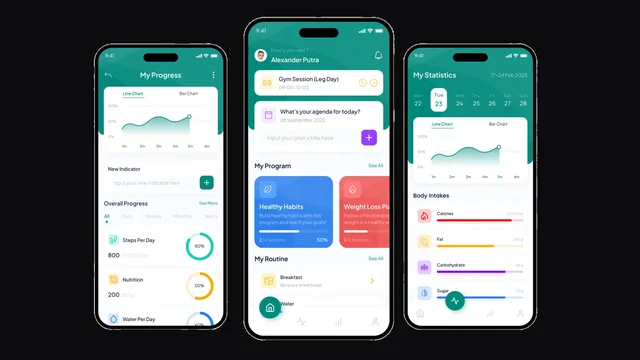
A semester record is a structured document with derived state and an administrative interface on top of it, used by an office under deadline. These are three builds where exactly that was the deliverable.


Questions
College systems, answered
- What does college management software do?
- It holds a college’s academic record: programmes and the students enrolled on them, the terms those programmes run in, the courses offered each term, which courses each student is registered for, attendance and assessment through the term, and how a term closes and the next opens.
- Is this the same as a school management system?
- No. A school enrols a student into a class for a year and carries them forward; a college rebuilds the academic record every term against a programme, with courses and electives registered each time. The period model differs, so the Products differ.
- Is this an LMS?
- No. An LMS delivers teaching — content, lessons, submissions, learning progress. This holds the record the teaching happens against, and the two connect at registration where a confirmed place can grant course access.
- Does being on a programme mean the term is registered?
- No, and treating it that way is the most common way a term’s registers and results go wrong. Registration is complete only when every slot the institution requires for that term is confirmed.
- Does a course being offered register a student for it?
- No. Offered is a fact about the catalogue; registered is a fact about one student’s record, reached through whatever selection and review the institution requires.
- Does a completed semester complete the degree?
- No. Programme completion depends on the institution’s own requirements and formal review. This system holds the record those decisions are made from; it does not make them or issue degrees, transcripts or certificates.
- Can it handle fees?
- It can record a term fee requirement, its status, and a registration hold where the institution configures one. Invoice workflow belongs to billing, money movement to a payment provider, and the books to accounting.
- Does it provide UGC, AICTE or NAAC compliance?
- Compliance and accreditation are relationships between an institution and its regulator or affiliating university, not features of software. Reporting can be scoped against the institution’s actual obligations and formats where that is part of a project.
- Should we build custom or buy a college ERP?
- Buy, if standard programme, term and registration workflows fit and the sector reporting you need already exists there — that is most colleges. Build when the academic model cannot be expressed, when several systems must agree about one student, or when a bounded layer beside an existing ERP is the right shape.
Start
Bring one registration window, and the student it went wrong for
The fastest way to scope a college build is a real term with real friction in it. Bring one registration window, and the record the academic office had to fix by hand.
- How your programmes and terms are structured, and how much varies between them.
- What a student chooses each term, and who reviews it.
- Where attendance and results live today.
- What the fee position does to registration, if anything.
- What you have to report, to whom, and in whose format.