
Branditify for SaaS startups
Signing up is not the same as getting value.
A SaaS business has to make three things agree: the product, the way buyers understand it, and the route a user takes to something useful. Branditify builds the product, writes the promise it has to keep, and shortens the distance between the two.
Most early SaaS does not have an acquisition problem. It has a distance-to-first-value problem.
Illustrative interface · sample data
What Branditify actually builds
The product, and the systems around selling it.
Two different purchases. One decides whether an account ever reaches something useful; the other decides what happens to the demo requests and trials that produced it.
Services
From an idea or a stalled MVP to a product people keep opening.
Chosen for what an early SaaS company genuinely needs, and stated with what each one does not cover.
MVP & SaaS Development
There is a prototype, a Notion doc and a waiting list, and no account anybody can be given that survives a real week of work.
The product around the promise — accounts and workspaces, the states a record moves through, persistence, roles where the workflow needs them, the admin surface somebody has to operate it from, and a deployment a team can run.
A founder stops demoing a walkthrough and starts handing over a login.
Usually the largest single piece of work.Scope follows the workflow. Billing, granular permissions, SSO and integrations are added when the product genuinely needs them — adding them early is the fastest way to make an MVP stop being minimal.
MVP & SaaS DevelopmentPremium Websites
The homepage lists automations, dashboards, integrations, permissions and templates, and never says who it is for or what changes for them.
What problem it solves, who it is for, what the product actually is, one honest look at the workflow, and the route in — trial, demo or both, matching how the product is genuinely sold.
A stranger can tell in forty seconds whether this is for them.
SEO & AEO
The category term is contested and expensive, and the pages that would win the specific searches do not exist.
Use cases, the comparisons a buyer genuinely makes, and the questions asked before a trial — written as pages that can be found and quoted.
Demand that already exists arrives without paying for every click.
Branding & Identity
A geometric wordmark, a gradient and a screenshot — and a product with a genuine position looks like the other forty in the category.
An identity with its own logic, applied from the site to the product interface to the deck and the invoice.
The product is recognisable, which is most of what a young category can own.
Content
Every question a prospect asks gets answered brilliantly on a call and nowhere a search engine can reach.
Use cases, honest comparisons, the objection a founder hears weekly, and the product education that shortens the second call.
The first conversation starts further along.
Almost nobody needs all of these at once. The common order is the product, then the page that explains it, then the discipline of learning from the demos and trials it produces.
Systems
Where the demos and trials go.
Used where the volume or the sales model genuinely calls for them, and left out where it does not.
CRM
Demo requests arrive from the site, a founder’s inbox and a conference, and the objection each one raised lives in whoever took the call.
One record per account — source, use case, stage, owner and next action — with the objection written where the product team can read it rather than hear about it.
What buyers keep asking for stops being anecdotal.
Usually the first system a SaaS startup needs.It holds the opportunity and the relationship. It is not product analytics, it is not a data warehouse, and it will not tell you what users did inside the product.
CRMSales Copilot
The founder is running discovery, the build and the follow-ups, and the follow-up is what slips.
Account context assembled before a call, and a drafted follow-up afterwards — with the person sending it deciding what actually goes.
The follow-up happens on Thursday rather than eventually.
Assistive and reviewed. Nothing is sent without a person approving it, and it does not run a pipeline on its own.
Sales CopilotDashboards
Three tools each hold part of the picture and the weekly number is assembled by hand on a Monday.
Bounded visibility across the sources that genuinely exist — pipeline, accounts, and whatever the product itself reliably records.
One place that agrees with the systems underneath it.
Optional, and only worth it once the sources are real.It reports what connected systems contain. It invents no metric, and a dashboard cannot make a number exist that nothing is measuring.
DashboardsA founder taking six demos a month can run this from a spreadsheet honestly. These earn their place when more than one person is answering, or when what buyers keep asking for has started to matter more than any single deal.
The first problem
The site, the demo and the product describe three different things.
A founder explains the product one way on a call, the homepage says something broader, and the first screen after signup asks for something else entirely. Each is defensible alone. Together they cost the buyer the thread.
How should a SaaS homepage explain the product?
With the three things a buyer is actually trying to establish: what problem this solves, what the product is, and who it is for. A list of features answers none of them — it describes capability to somebody still deciding whether the capability is relevant. The strongest test is whether the sentence on the homepage is the same sentence the product delivers in its first useful screen. When those two diverge, the trial converts badly and nobody can say why, because the marketing looks fine and the product works.
The second problem, and the expensive one
An account was created. Nothing has happened in it.
Signups are easy to count and easy to celebrate, and they say almost nothing. The event worth designing for is the first time the product does the thing it promised, to a real record, for a real person.
One record, one owner, one next action. The promise is now true of something real — and that is the event worth designing the whole entry path around.
The event differs by product and every startup has to name its own. No activation rate, retention curve or time-to-value figure appears on this page; the published benchmarks belong to whoever measured them.
What is the difference between signup and activation in SaaS?
A signup is an account existing. Activation is the first moment a user gets the thing they came for — and it is specific to the product, not a universal metric. For an approvals tool it might be one request routed with an owner; for a billing product, one invoice actually sent. The useful discipline is to name that event precisely, then remove everything standing between arrival and it. Teams that cannot name their first-value event usually optimise signup instead, which is why the number goes up and the retention does not.
The third problem
Everything that has to happen before anything useful can.
Some setup is genuinely required. Most products also carry setup that could happen later and does not, because it was easier to build the configuration screen than to decide what a first session actually needs.
- A workspace
- One real request
- Somebody who owns it
- Inviting the rest of the team
- Connecting other tools
- Advanced rules and custom fields
- Importing history
How do SaaS startups reduce onboarding friction without breaking the product?
By sorting setup into what first value genuinely depends on and what merely arrives at the same time. A workspace and one real record are usually required. Inviting the team, connecting tools, configuring permissions and importing history usually are not — they are things a satisfied user will happily do on day three. The test is simple and uncomfortable: remove a step and ask whether the first useful outcome is still possible. If it is, that step is not onboarding, it is homework.
One possible setup
The demos happen. The learning evaporates.
An early SaaS company generates an enormous amount of information every week — objections, confusions, the same question three times — and most of it ends the day it was heard. This is one arrangement that keeps it.
Sales Copilot, Dashboards and booking are optional layers. A founder taking a handful of demos a month can do all of this honestly by hand.
Does a SaaS startup need a CRM, and how is it different from product analytics?
They answer different questions and neither substitutes for the other. A CRM holds the people and the opportunities — who asked, what they objected to, who owns the follow-up. Product analytics holds behaviour inside the product — what accounts actually did. A founder can run early demos without either and should not run twenty a month without the first, because the cost is not a missed deal, it is that the objection heard in nine of them never reaches the roadmap.
The questions founders actually ask
Six decisions, answered without selling you the larger one.
Each of these has a fashionable answer and a correct one, and they are frequently different.
What should a SaaS startup build first?
The shortest honest path to one account reaching one useful outcome. Not the feature list, not the pricing page, not the integrations — the single workflow the product exists for, end to end, with real state behind it. Everything else is easier to judge once something real has happened in an account, because from that point the roadmap is a series of questions with evidence attached rather than a list of things that sounded necessary.
Where this page stops
If the AI behaviour is the thing being bought, that is a different page.
Plenty of SaaS products contain AI, and that does not change any of the above — the promise, the route in, the workspace and the first useful outcome work the same way. What changes the questions is when the AI behaviour itself is what the customer is purchasing.
AI startup or SaaS startup — which page applies?
Ask what the buyer is actually purchasing. If it is a software workflow that happens to use a model somewhere, this is the right page and the decisions are the SaaS ones — entry path, activation, pricing clarity, retention. If the model behaviour is the product, the questions become where answers come from, what the system is allowed to touch, who reviews its output and what happens when it has no basis to answer, and those belong on the AI startups page. A company can be both; the pages are separate because the questions are.
Relevant capability, described exactly
What Branditify has actually built.
Product surfaces Branditify built, operates and offers — which is a different kind of statement from a client outcome, and is presented as one rather than dressed up as a case study.
CRM
Accounts, stages, owners and next actions — the opportunity layer this page recommends.
Branditify’s own product capability.
View CRMSales Copilot
Account context and drafted follow-ups, with a person approving what is sent.
Branditify’s own product capability.
View Sales CopilotMVP & SaaS Development
The service that builds the product around a promise — accounts, states, roles, admin, deployment.
A Branditify service, delivered to scope.
View MVP & SaaS DevelopmentRelevant capability work
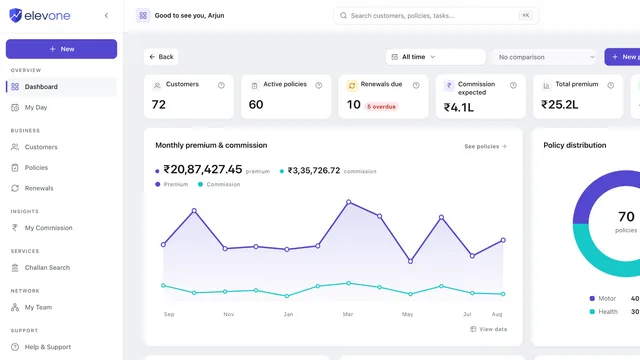
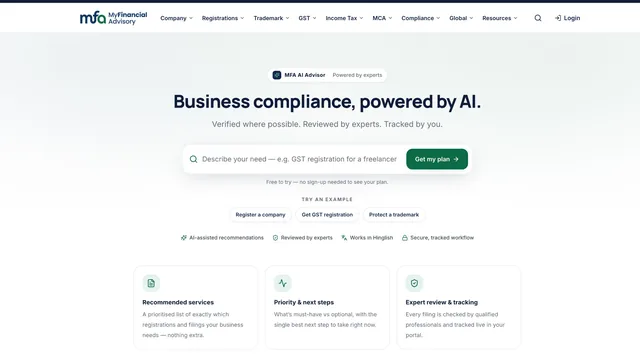
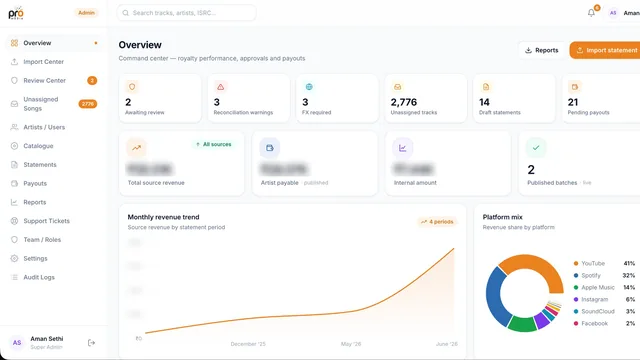
Platforms we have designed and built.
No SaaS-startup client case is published yet. These three are delivered platforms with real users, roles and operational state — the build capability this page describes, for businesses in other categories.
Questions founders actually ask
The rest of it, answered directly.
What should a SaaS startup website include?
What problem the product solves, who it is for, what it actually is, one honest look at the workflow, and a route in that matches how the product is genuinely sold. Plus the comparisons and objections buyers raise anyway — answering those in public shortens every first call.
What is the difference between signup and activation?
A signup is an account existing. Activation is the first time the product does the thing it promised, for a real person, to a real record. Counting signups is easy and tells you very little; naming the first-value event and removing what stands in front of it is the work.
What is first value in SaaS?
The specific outcome a user came for, achieved once. For an approvals tool it might be one request routed with an owner; for a billing product, one invoice sent. It is product-specific — any universal definition is somebody else’s product being described.
SaaS MVP or full product — what should be built first?
An MVP with enough of the core flow, real persistence and enough quality to be trusted with actual work. That bar is higher than a prototype and much lower than a full product. Plans, integrations, automations and enterprise controls come after something real has happened in an account.
Free trial or demo-led for a SaaS startup?
Whichever matches how the product is understood. One person who can reach value alone suits a trial. A workflow owned by several people, or a purchase with security and integration questions, usually suits a demo. Many products run both, and product-led is one answer rather than the modern one.
Product-led or sales-led growth?
It follows product complexity, the buying group and what has to be true before someone can use the thing. Product-led puts more of acquisition and activation inside the product; sales-led puts more of it in a conversation. Neither is more sophisticated, and hybrids are common.
Does every SaaS need a free trial?
No. A trial is a good idea when a user can reach something useful without help. When they cannot, a trial mostly manufactures expired accounts and a founder concludes the product has a retention problem it never had.
Does every SaaS need a mobile app?
No. Most B2B SaaS is used at a desk, and an excellent responsive product beats a thin native one. An app earns itself when the workflow is genuinely mobile — field use, capture, or something needing the device.
Website, product tour, or live demo?
The website says who it is for and why it matters. A product tour shows how it behaves. A live demo lets a complex purchase be discussed with the people making it. Products with simple value often need only the first two; complex ones usually need all three.
Does a SaaS startup need a CRM?
Once more than one person answers enquiries, or demos reach a volume where objections start repeating, yes. The cost of not having one is rarely a lost deal — it is that the objection raised in nine of twenty calls never reaches the roadmap.
CRM or product analytics for a SaaS startup?
Different questions. A CRM holds who asked and what they objected to; analytics holds what accounts did in the product. Early on the CRM usually matters more, because there is more to learn from conversations than from a usage sample that is still small.
When should SaaS founders invest in SEO?
Once the use case can be named. Before that there is nothing specific to rank for, and contested category terms are an expensive place to learn. Afterwards, the use case, the comparison and the objection are the three pages worth writing first.
SEO, paid, or outbound for SaaS?
SEO compounds and is slow. Paid tests an offer and a landing path quickly and stops with the budget. Outbound works when the account and person are specific. The mix follows the sales model and how much is still unknown, not which channel is currently fashionable.
How do SaaS startups reduce onboarding friction?
By separating what first value genuinely depends on from what merely happens at the same time. Remove a step and ask whether the first useful outcome is still possible; if it is, that step is homework rather than onboarding, and it can wait until somebody wants to do it.
Should a SaaS startup publish pricing?
It depends on the sales model, and the useful standard is not whether prices appear but whether the page makes plans legible — what each is for, what genuinely differs, and who should speak to someone. Confusion about price in this category is usually confusion about scope.
Can an existing MVP be improved without rebuilding everything?
Usually. Most stalled MVPs have a sound core and an unfinished middle, and a rebuild discards the one part that has been validated. What is worth replacing is whatever cannot be reasoned about — not whatever is unfamiliar.
Can existing users and data move to a rebuilt product?
Generally yes, where the data is exportable and the model can be mapped. Accounts, records and history usually migrate; what rarely survives is state that only ever existed in a spreadsheet somebody maintained by hand.
Who owns the product, code and data after a custom build?
The startup does — code, data, content and accounts in its own name, on infrastructure it controls, with no dependency on Branditify to keep running.
What determines SaaS development scope?
The workflow being built, the states a record moves through, who needs different access, and what has to be true before real users touch it. Not a feature count — and features added because they sounded necessary are the most common reason a first release slips.
AI startup or SaaS startup — which applies?
Ask what is being purchased. A software workflow that uses a model somewhere is a SaaS question — entry path, activation, retention. When the model behaviour is itself the product, the questions become sources, permissions, review and fallback, and those belong on the AI startups page.
If this is the product you are building
Start by naming the first useful thing an account should do.
The first conversation is usually about one workflow: what the promise is, who arrives, what has to be set up, and what counts as the product having worked. That is normally enough to see what to build first and what to leave out.