
AI voice agent · inbound & outbound calls
The call went well. Did anything actually happen?
Branditify builds voice agents that answer the phone, work out what the caller needs, answer from information you have approved, and finish the job in a connected system — or hand the call to a person when it needs one.
Northline AutocareCall #0147 · inbound
On the call
- Ringing — 6:40pm, after hours
- Voice agent“Northline Autocare, this is an automated assistant. How can I help?”Call answered · inbound
- Caller“I need to get my car booked in for Tuesday afternoon.”Request: service booking · Tuesday PM
- Voice agent“I can do that. Andheri or Powai?”
- Caller“Andheri.”Branch: Andheri
- Voice agent“Let me look at Tuesday afternoon.”
- Voice agent“I’ve got 3:30 or 4:45.”Availability checked · 2 slots open
- Caller“3:30, please.”
- Voice agent“And a mobile number for the confirmation?”
- Caller“It’s the one I’m calling from.”
- Voice agent“Booked — Tuesday 3:30, Andheri. Confirmation on its way.”Booking created · confirmation sent · record updated
The phone rings after the branch has closed.
Illustrative call · sample data
Where this starts
A call needs a job, not a personality.
The question is never “can it hold a conversation”. It is “what is it allowed to finish”.
An AI voice agent is a software system that handles defined phone conversations: it understands what a caller is asking for in natural speech, answers from information the business has approved, takes an allowed action in a connected system where one applies, and transfers the call to a person when the conversation needs judgement.
The brief that arrivesWe want an AI that answers the phone.
The version that can be builtWhich calls arrive over and over, and what should be true at the end of each one?
- Book somethingA slot, an appointment, a service visit — created in the system that actually holds availability.
- Answer a known questionHours, locations, what a service covers, where an order is — from approved information rather than from guesswork.
- Qualify an enquiryAsk the handful of questions that decide whether this is a fit, and record the answers.
- Get it to the right placeUnderstand what the call is about and put it in front of the person or team who handles it.
- Follow something upA confirmation or a reminder, placed as an outbound call where that is agreed and appropriate.
Every one of those ends with something being true that was not true before. A call that ends with a good feeling and nothing recorded is a call the business will have to have again.
The call
What was said, and what it changed.
Select a line to see what it did.
The useful way to look at a voice agent is not the transcript. It is the pair: what the caller and the agent said, and what became true in the business as a result. Most lines in a real call change nothing — greetings, clarifications, a read-back — and the few that do are the ones the business is paying for.
The call
Ringing — 6:40pm, after hours
What it changed
Nothing. And the call still needed it.
Voice agent
“Northline Autocare, this is an automated assistant. How can I help?”
What it changed
Call answered · inbound
Caller
“I need to get my car booked in for Tuesday afternoon.”
What it changed
Request: service booking · Tuesday PM
Voice agent
“I can do that. Andheri or Powai?”
What it changed
Nothing. And the call still needed it.
Caller
“Andheri.”
What it changed
Branch: Andheri
Voice agent
“Let me look at Tuesday afternoon.”
What it changed
Nothing. And the call still needed it.
Voice agent
“I’ve got 3:30 or 4:45.”
What it changed
Availability checked · 2 slots open
Caller
“3:30, please.”
What it changed
Nothing. And the call still needed it.
Voice agent
“And a mobile number for the confirmation?”
What it changed
Nothing. And the call still needed it.
Caller
“It’s the one I’m calling from.”
What it changed
Nothing. And the call still needed it.
Voice agent
“Booked — Tuesday 3:30, Andheri. Confirmation on its way.”
What it changed
Booking created · confirmation sent · record updated
- Nothing yetA greeting, a question, a read-back. Necessary, and it changes nothing.
- State changedSomething is now true in the business that was not true a moment ago.
Eleven exchanges, five of which changed something. The other six were not wasted; they are how the five became possible. A demo where every line lights up has never met a real caller.
There is no intent-confidence percentage here and no accuracy figure. A number beside a sentence is not something a business can act on, and it tends to be the first thing that stops being true once real callers arrive.
Understanding
People do not call in fields.
One sentence, and everything a system needs to get out of it.
Callers describe a situation rather than filling in a form. A voice agent has to take an ordinary sentence and pull out what the request actually is, what constrains it, and what has already gone wrong — then decide what it still needs to ask.
“I’ve been trying to book since yesterday and I can only get there after three.”
- The requestA service booking
- The constraintAfter 3pm only
- What already happenedTried before and did not get through
- Still missingWhich branch, and which day
- So the next move isAsk for the branch — not repeat the question she just answered
The failure mode worth designing against is not mishearing a word. It is asking somebody for something they have already told you, which is the thing that makes people ask for a human.
What it knows
It answers from what you approved. Not from everything.
The scope of what a call can draw on is a design decision, not a side effect.
A voice agent answers from a defined set of business information — hours, locations, what services cover, policies, approved answers to common questions, and live availability through a connected system. What it can reach is decided when the workflow is designed, so a call cannot wander into information that was never meant for it.
What this call can use
- Opening hours and branch locations
- What each service covers, and what it does not
- Approved answers to the questions that come up every day
- Live availability, read from the booking system
- The caller’s own record, where they have been identified
What it has no route to
- Anything in systems this workflow was not connected to
- Internal documents nobody approved for customer answers
- Another customer’s details
- Pricing or policy that has not been agreed as an answer
Where a business already has a searchable internal knowledge base, a voice workflow can be pointed at approved parts of it — that is a connection, not a second product.
RAG Knowledge BaseWhen something is missing
Ask, pause, or pass it on. Do not invent.
Three designed responses to not knowing, and none of them is a guess.
When a voice agent does not have enough information to act, it can ask a clarifying question, stop short of the action and take the caller’s details instead, or transfer the call to a person. Which of those happens is decided per workflow when the agent is designed — the one behaviour that is never acceptable is filling the gap with something plausible.
- Ask for itOne question, about the thing that is actually missing. “Andheri or Powai?” rather than starting the call again.
- Stop shortTake the details and arrange a call back, rather than confirming something it cannot actually confirm.
- Pass it to a personSome calls are outside what was designed. Recognising that quickly is a feature, not a failure.
What it does not do
Confirm a slot it has not checked, quote a price it has not been given, or agree to something nobody has approved it to agree to. An agent that invents the missing detail is worse than one that admits it, because the business finds out later.
When it belongs with a person
Some calls should reach a human, holding everything already said.
The transfer is the product, not the failure.
A voice agent can transfer a call to a person, and the transfer is worth designing properly: the caller should not have to start again. What was already established — who they are, what they are calling about, what has been checked — goes with the call, so the person picking it up begins in the middle rather than at the beginning.
The call
“I was told last week that this would be sorted, and it has not been. I want to speak to someone.”
What the agent does first
- Confirms who is calling and the reference they have
- Establishes what was promised and when
- Checks what is actually recorded against it
- Says a person is being brought in — rather than transferring silently
What arrives with the transfer
- Caller and number, already identified
- What the call is about, in one line
- What was checked, and what it showed
- The point the conversation had reached
The measure of a handoff is whether the person taking the call has to ask anything the caller has already answered. If they do, the transfer moved the call without moving the context.
Which situations transfer, to whom, and what happens if nobody is available, are all decided when the workflow is designed rather than left to the moment.
Doing something
The action happens while they are still on the line.
On a call there is no link to send and no list to scroll. It completes now or it does not complete.
Where it is connected, a voice agent can take an allowed action during the call — create a booking in the calendar or booking system, create or update a record in the CRM, log the outcome, or trigger a confirmation message. What it is allowed to do is defined per workflow, and it does not have access to anything beyond that.
- The caller asks“Tuesday afternoon, Andheri.”
- It reads availabilityFrom the system that actually holds the calendar, not from a cached list.
- It offers what is realTwo slots that genuinely exist, right now.
- It writes the bookingCreated in the same system the branch works from.
- It records the outcomeContact updated, call summarised, confirmation sent.
And when the connected system is unavailable
The call still needs an ending. A designed fallback takes the caller’s details and arranges a call back, rather than confirming a booking the system never accepted. A voice agent that says “done” when nothing was written is worse than one that says it cannot do it right now.
Both directions
Calls that arrive, and calls that are placed.
Supported both ways — with different rules attached to each.
A voice agent can answer inbound calls and place outbound ones. Inbound is the straightforward case: somebody rings and the call gets handled. Outbound carries obligations inbound does not — who may be contacted, on what basis, at what times, and how to stop — so outbound workflows are designed around confirmations, reminders and follow-ups to people who are already expecting to hear from you.
Inbound
The phone rings and the call gets answered, including outside office hours, when otherwise it would have gone unanswered or to voicemail.
Booking, a known question, qualification, getting it to the right team.
Outbound
The system places a call as part of an agreed workflow, to somebody who has a reason to expect it.
Confirming an appointment, a reminder before a visit, following up on something already started.
What outbound is not
This is not a cold-calling or telemarketing system, and it is not sold as one. Any outbound workflow is designed around the consent, contact-time and opt-out requirements that apply to the business and the audience — which are confirmed as part of the design rather than assumed here.
How this fits
A chatbot, a menu, a person, or this.
Four ways a business handles the same request. They are not competing.
A chatbot handles the same kinds of request in text, on a site or in WhatsApp. An IVR routes callers through fixed menu options. A voice agent holds a defined conversation on the phone and can complete the task within it. A person is better whenever the call needs judgement, negotiation or genuine discretion — and most businesses end up using more than one of the four.
- AI ChatbotSomebody already on your site or in WhatsApp, who can read, scroll back and tap an option.Same jobs — qualify, book, hand off — in a medium where the person can see their choices.AI Chatbot
- A phone menuA small, stable set of destinations where routing is genuinely all that is needed.Cheap, predictable and well understood. It struggles when the caller’s request does not match a menu item.No page — it is a comparison
- A voice agentRepeated, defined calls where the caller should be able to just say what they want and have it done.This page. No scrollback and no options to tap, so the conversation has to carry everything.This page
- A personJudgement, negotiation, an upset customer, an exception nobody wrote down, or anything with real consequences.Not a fallback. Some calls should reach a person quickly, and the agent’s job is to get them there with context.No page — it is a comparison
So is this just a smarter IVR?
No, though they overlap at the edges. An IVR maps a keypress to a destination. A voice agent understands a spoken request, asks what it still needs, and can complete the task itself where it is connected to do so. An IVR moves the call; a voice agent can finish it.
Does it replace the people answering the phone?
That is not how this is sold. It takes the calls that repeat and are defined enough to be finished by a system, which is usually the ones nobody wanted to spend their day on, and hands everything else to a person with the context already gathered. Where a business chooses to point the time it frees up is a decision for the business.
After the call
The call ends. The record does not.
What a finished call leaves behind.
When a call ends, what should remain is a record the business can act on: who called, what they wanted, what was done, and what happens next. Where it is configured, that includes a transcript and a summary written back to the customer record, so the next person to speak to them starts from what already happened.
- Call
- #0147 · inbound · 1m 34s
- Caller
- Maya · identified from the number
- About
- Service booking, Andheri
- Result
- Booked — Tuesday 3:30pm
- Next
- Confirmation sent · reminder scheduled
- Written to
- Booking system and customer record
- Recording and transcripts
- Transcripts, consent-based recording and audit logs can be part of the system where they are configured. Recording is not something to switch on quietly: what is required — announcing it, capturing consent, how long anything is kept, who can listen — depends on where the business operates and who it is calling, and is confirmed as part of the design rather than assumed.
- How it sounds
- Greeting, tone, pace, the words used for your services, and what it says when it is escalating are all set deliberately, so every call sounds like the same business. What it is not designed to do is pass for a specific person — it says what it is when it answers, and that is a design decision rather than a limitation.
- Languages
- Multilingual calls are supported. Which languages and which voices apply to a given deployment depends on the telephony and voice providers involved and on how the workflow is designed, so those are confirmed during design rather than listed as a blanket promise.
Scope
What makes one voice agent bigger than another.
This is a build, not a subscription — so it is scoped rather than priced off a page.
Voice agent scope follows how many different calls it has to handle, how far each one has to go, how many systems it has to reach, whether outbound is involved, how many languages and locations are in play, and what has to be true about privacy, consent and verification for the calls being handled.
- How many kinds of callOne well-defined call is a different build from a switchboard that has to recognise eight.
- How far each one goesAnswering a question, versus completing a booking and writing it into two systems.
- How many systemsEvery connection is another set of permissions, another failure mode and another fallback.
- Inbound, outbound, or bothOutbound brings consent, contact-time and opt-out requirements that inbound does not.
- Languages and locationsMore languages and more branches mean more variants of the same conversation to design and test.
- Identity and privacyWhether the caller has to be verified before anything is shared or changed.
- Handoff and exceptionsWho receives a transfer, what carries across, and what happens when nobody is there.
- Testing before it is liveReal calls are unforgiving. How much rehearsal a workflow gets before it answers a customer.
- Design the callWhich calls, what each one has to end with, what the agent may say and do, and where it must stop.
- Build and tuneConnect the systems, set the voice and the wording, and run the conversation until it holds up.
- Supervised pilotLive calls, limited in scope, watched by people who can step in.
- Widen itMore call types or more volume, with samples reviewed as it goes.
Choosing telephony and voice providers
Decided per project against what the work actually needs: call quality on the routes involved, the languages and voices required, how numbers and telephony are handled in the region, what the provider does with call data, cost at the expected volume, and how well it connects to the systems the workflow has to reach.
- What we need from you to start
- Why people call, what your team currently checks when they do, the questions that repeat, what should happen by the end of the call, and which situations should always reach a person.
- What a first build usually leaves out
- One call type done properly beats four done approximately. Additional intents, additional languages and outbound workflows are normally a second phase, because each one needs its own testing before it meets a customer.
- What sits outside this build
- The systems the agent talks to. If the calendar, the CRM or the knowledge behind the answers needs work of its own, that is scoped separately — a voice agent connected to a system nobody trusts inherits the problem rather than solving it.
Background
Selected AI & systems work.
Projects with a conversational or workflow system in them, each listed with what was delivered.
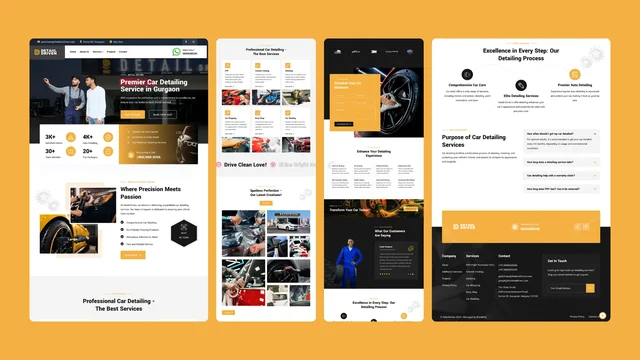

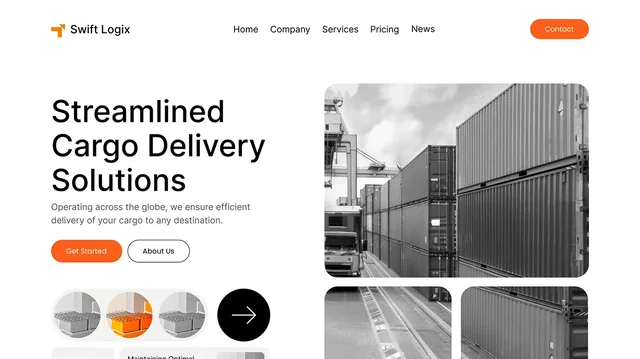
These are delivery projects, listed as delivered. What they establish is the kind of system this work sits inside — conversational interfaces, decision flows and the integrations behind them.
Questions
What businesses ask before building one.
- What is an AI voice agent?
- Software that holds a real phone conversation for a defined job — as opposed to a recording, a menu or a script. The distinction that matters commercially is that it can finish the task, not just route the caller: the booking is made, or the record is updated, during the call.
- What can a voice agent actually do on a call?
- Within the workflow it was built for: answer known questions, book or reschedule something through the system that holds availability, qualify an enquiry by asking the questions that decide fit, route the call to the right team, and record the outcome. What it is allowed to do is defined when the workflow is designed.
- How is this different from an AI chatbot?
- The jobs overlap — both can qualify, book and hand off — but the medium does not. A chatbot user can read, scroll back and tap an option. A caller can do none of those, so everything has to be carried in the conversation and the action has to complete while they are still on the line.
- How is a voice agent different from IVR?
- An IVR is a routing tool and a good one when routing is genuinely all you need. The practical test is whether your callers regularly want something no menu item covers — if they do, they are currently being sent to whoever is least able to say no, which is what a voice agent is for.
- Does it replace the people who answer the phone?
- What usually changes is the mix rather than the headcount. The calls that vanish are the ones nobody was doing anything interesting with — the same booking, the same opening-hours question — and what remains is the harder half, which is also the half where having a person on the line is worth paying for.
- Can it answer inbound calls?
- Yes, and it is the most common starting point because the value is easy to see: the calls that currently ring out, go to voicemail or arrive when everybody is already on the phone. Those are the ones a business never finds out it lost.
- Can it make outbound calls?
- Yes, and the first question is never technical — it is whether you have a lawful basis for calling these particular people, which you generally do for someone with a booking and generally do not for a purchased list. That answer decides whether an outbound workflow is worth designing at all.
- Can it book appointments?
- Where it is connected to the system that holds availability, yes: it reads what is genuinely open, offers real slots, and creates the booking during the call rather than promising that somebody will call back.
- What happens if it does not understand the caller?
- It asks a clarifying question, stops short of the action and takes details for a call back, or transfers to a person — whichever the workflow specifies. What it does not do is fill the gap with something plausible.
- What happens if information is missing?
- The same three designed responses. Missing the branch means asking which branch — not confirming a booking it cannot actually make, and not asking the caller to repeat what they already said.
- Can it transfer a call to a person?
- Yes. Worth deciding early is who receives them — a queue, a named person, a rota — and what happens when nobody picks up, because an unanswered transfer is a worse outcome than never offering one. That is designed rather than left to the moment.
- Can it use our existing business information?
- Yes, within a defined boundary set during design. In practice the useful exercise is the opposite one: deciding what it must never say, because most businesses have information sitting in reachable systems that nobody wants read out on a phone call.
- Can it connect to our CRM or booking software?
- Yes, where an integration is available. It can read allowed customer context, create or update records, and write the call outcome back. Each connection is scoped explicitly, including what happens when that system is unavailable.
- What happens if a connected system is down mid-call?
- It falls back to something it can still complete — usually taking details for a call back. This is worth specifying per integration rather than in general, because “the calendar is slow” and “the calendar is unreachable” deserve different answers on a live call.
- Can calls be recorded or transcribed?
- Both can be configured. Treat it as a decision with obligations attached rather than a setting: what has to be announced, what consent looks like for your callers, how long anything is kept and who may listen are established for your jurisdiction and audience before it is switched on.
- Does it support multiple languages?
- Yes. The part that catches people out is that a language is not one decision — recognising it, speaking it well, and handling a caller who switches mid-sentence are three, and how far each is supported depends on the providers chosen for your deployment.
- Can different types of call use different workflows?
- Yes, and that is usually how it is built — a booking call, a status question and a complaint are different conversations with different endings, different permissions and different handoff rules.
- What determines the size of a voice agent project?
- Almost always the number of different calls it has to recognise, rather than anything technical. One intent taken all the way through is a contained build; five is not five times the work but it is closer to that than most people expect, because each one needs its own edge cases and its own testing.
- Who owns the system and the call data?
- You do. The practical test of that is whether you could take the system to another supplier without asking us for anything, and setting provider accounts up in your name where practical is what makes the answer yes.
- What happens after launch?
- The first weeks of real calls are the most useful information the project produces, because callers ask for things nobody thought to design for. Acting on that is a separate, explicitly scoped piece of work rather than something assumed into the build.
Start
Bring us the call your team keeps answering.
The one that arrives ten times a day and ends the same way every time.
- Why people call
- The handful of reasons that account for most of the phone ringing
- What your team checks
- The systems or screens somebody opens while the caller waits
- What repeats
- The questions answered so often that everyone knows the wording
- What should be true after
- The booking, the record, the message — whatever the call is meant to produce
- What must reach a person
- The calls where a system should get out of the way quickly